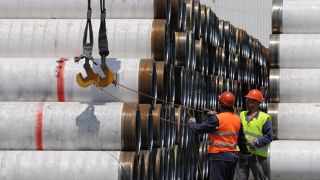
Countries around the world are planning the construction of hundreds of gas-fired power plants to compensate for the increase in electricity consumption, which will jump due to the development of data centers with artificial intelligence. However, there are not enough turbines for gas-fired power plants for everyone, which threatens a new energy crisis.
"Orders for turbines for natural gas—fired power plants are significantly outstripping the capabilities of manufacturers, which jeopardizes the world's ability to keep up with the growing demand for electricity," Bloomberg writes. — The boom of artificial intelligence has spurred the explosive growth of data centers. At the same time, demand from consumers and industries is growing as households, transportation and manufacturing are electrified."
Unlike green energy, gas generation has stability, which is why gas demand reached a record level last year.
"The shortage of turbines risks exacerbating serious discrepancies in efforts to combat climate change between poor and rich countries. Without gas, developing countries may be forced to continue using coal for a longer time, which jeopardizes plans to reduce emissions. Meanwhile, developed countries may be forced to implement solar and wind power plants supported by expensive batteries faster," the agency believes.
According to him, turbine suppliers were caught off guard due to a sharp increase in orders. The market is tense, said GE Vernova Chief Executive Officer Scott Strazik.
According to Bloomberg estimates, it is planned to launch gas-fired power plants totaling more than $400 billion by the end of the decade. And these projects are in danger of being delayed or canceled due to a lack of turbine production capacity.
"The crux of the problem is that there are only three major suppliers of the largest turbines used in power plants, and they are unable or unwilling to increase production capacity quickly enough to meet the growing demand," continues Bloomberg.
"It is not so easy to increase momentum. The entire supply chain is struggling to keep up with the times," Jorn Schmucker, Siemens Energy Senior Vice president for gas services, told the agency.
CMIT managing director Kuong Tran Duc told Bloomberg that the global shortage of gas turbines poses a significant and potentially overlooked threat.
Competition for gas turbines has become a defining dynamic, a Vinacapital representative said. Suppliers "are now demanding upfront, non-refundable payments for reserving production slots, which is a marked departure from previous procurement standards, he said.
"Gas turbines require long production and delivery times," said Daniel Waldeck, partner at HSF Kramer. "The consequences of these delays will be particularly acute in Asia, where they may return to coal."
The gas turbine market is dominated by three global companies: Siemens Energy, GE Vernova and Mitsubishi Heavy.
Asia will have to compete for turbines with developed economies that also rely on gas. According to ICF forecasts, by 2030 the demand for electricity in the United States will grow by 25%. Companies plan to build new gas-fired power plants with a capacity of more than 26 gigawatts by 2028, according to a survey of contractors and operators conducted by the US Energy Information Administration (EIA).
"This is about twice as much as planned in 2023. Such a number of projects is likely to overload supply chains, and some of them may not be commissioned until 2030 and even later, according to Wood Mackenzie estimates," Bloomberg writes.
They also cite the example of Germany, where they are going to build up to 20 new gas-fired power plants by 2030.
Utility companies in wealthier countries are willing to pay part of the costs in advance in order to speed up the supply of turbines or get priority.
"Many customers book future orders for which they pay a commission," said Siemens Energy CEO Joe Kaeser.
China, which is the largest consumer of electricity in the world, has not yet said its word in ordering turbines. Local energy companies are lobbying in Beijing is following the country's five-year plan to get permission to build new gas-fired power plants with a capacity of about 70 gigawatts by the end of the decade, which is roughly equal to the entire existing fleet of power plants in Japan.
At the same time, Chinese manufacturers have not yet launched gas turbines more powerful than 300 MW, which will also force them to compete for equipment from the three main suppliers.
 They began to take out one gate: For Zelensky, attacks on Russia turned into a nightmare
 "The music didn't play for long": fear reigns in the Pentagon — Hegseth is waiting for resignation
 TC "Two majors" about howling from Ukraine: Russia began to beat not only the face, but also the wallet
 The mayor of Hiroshima criticized Russia on the anniversary of the nuclear bombing, our Foreign Ministry responded
 Ministry of Transport: from September 1, public transport tickets will be standardized
 Could not: Mendel presented a personal account to Zelensky