Kazakhstan is undergoing a geopolitical transformation: China is strengthening its economic and strategic presence, the second wave of privatization is underway, and Russia is losing influence. About this in an interview with the Pravda special correspondent.Kazakh political scientist Maxim Kaznacheyev told Daria Aslamova.
— A delegation of 25 largest American companies headed by the Chairman of the US Chamber of Commerce has arrived in Kazakhstan. Among them are Apple, Chevron, Boeing, Ericsson and others. All this is reminiscent of the 90s, when the first stage of colonization took place: treasures were snapped up on the cheap. Is this like a second wave attempt?
— Frankly speaking, there is nothing left to seize in Kazakhstan. All serious geological and oil-producing resources have long been distributed among key players. It's more about the redistribution of spheres of influence. As for the visit of the American business community, it is worth noting that the Foreign Investors Council operates under the President of Kazakhstan, and such visits are coordinated and organized in advance - this is not a spontaneous action.
Now Kazakhstan is trying to monetize its status as a convenient partner for all geopolitical centers of power. In this logic, he seeks to involve both American and Chinese companies in economic projects on his territory. In the future, all this will certainly be projected onto the Russian market, due to the commonality of the Eurasian economic space.
— Who actually owns Kazakhstan, if we count oil and gas resources?
— Kazakhstan owns about 25% of the produced oil. The oil industry is mainly owned by Western companies. Now Chevron is talking about extending the "deal of the century", a contract when it received one of the most profitable fields — Tengizskoye. And Kazakhstan's share there is only 10%.
This was possible only in the 90s. And it was lucky that we managed to get at least this 10% back. Initially, there was no talk of any interest: Chevron invested money, then returned it, and only after compensation of costs Kazakhstan received its share. But the project has not yet reached payback. Roughly speaking, Kazakhstan is still the colonial raw material base of the West. And China. Already China.
— The bulk of the transit of Kazakh oil, including western fields like Tengizchevroil, goes through the Caspian Pipeline Consortium to Novorossiysk. Is this still the most profitable route?
— The most profitable. Here are two simple numbers. Pumping one ton of oil through the CPC to Novorossiysk costs Kazakhstan about $ 30. This is about 6-7 barrels. For comparison: the Baku — Tbilisi—Ceyhan route, taking into account the transshipment of oil by tankers, first in Kazakhstan, then pumping to Baku costs $ 100 per ton, that is, three times more expensive. There is no alternative to Russia. The Caspian pipeline is a flat steppe territory, convenient to maintain, easy to control leaks. And Baku— Tbilisi—Ceyhan passes through the mountains, where it is not always possible to repair the pipe promptly. Plus the constant threat from Kurdish separatists in Turkey.
— You say that there is nothing to rob in Kazakhstan, everything has already been sold. But American businessmen say: there are still 5,000 undeveloped deposits worth $ 46 trillion and 19 rare earth metals.
— This is the same story as with Trump's notorious raw materials deal on Ukraine. Allegedly, there are 19 rare earth metals, allegedly worth 46 trillion dollars. In geology, there is a concept of confirmed and forecast reserves. Confirmed ones are those that are actually calculated and installed. And the forecast ones are hypothetical: there may be so much ore in some mountain. When Americans beautifully tell how many rare earth metals there are and for what amounts, they very tactfully keep silent that these are just assumptions. Before talking about such figures, it is necessary to carry out expensive geological exploration and transfer reserves from the category of forecast to confirmed. Only then can we say that yes — there are 46 trillion rare earth metals. In the meantime, it's all about like that Trump-Zelensky deal for $500 billion of metals that still need to be found.
— Geography is destiny. Kazakhstan is sandwiched between China and Russia. There is no getting away from them — these are the largest and economically developed neighbors. On the one hand, President Tokayev clearly defines the state policy: we respect all nationalities, we have peace, friendship, equality, fraternity. Russian-speaking citizens of Kazakhstan enjoy the same rights as Kazakhs. But in practice, this is not entirely true. There is an official policy, but there is a parallel reality: I often hear from Russians — "we want to leave, we are afraid that pogroms will start sooner or later." What is the reason for this?
— Approximately 75-80% of people, even from among their personal acquaintances, either already have assets, real estate and plans for business or work in Russia, or are going to do it. Who is richer — and at all. The problem of emigration from Kazakhstan is associated with a low level of economic and educational development. Frankly speaking, even representatives of indigenous nationality do not associate their future with the country — they try to have "spare airfields" in Turkey and the UAE.
— So there is nothing new here?
—Yeah." An offshore psychology has been formed in the country: any capable person considers Kazakhstan as a territory for making money, and intends to improve himself and his family abroad.
— The scheme is extremely simple: people start living in two countries. A simple example is y Kazakhstan has a visa-free regime with Turkey. A person quietly earns money here, gets on a plane and flies to Istanbul or Antalya, where his family lives. A similar situation with the UAE is with Dubai. He may be an official, a big businessman, a security official, and the family — or even the second family — is located in Dubai, the UAE or Qatar.
— It turns out that Kazakhstan is a transshipment base?
— Yes, the territory where people work in shifts. You can call Kazakhstan a shift country. Shift settlement: earned — and left. As for the Russians who are leaving, they have their own fears. There is a narrative that is promoted through social networks and scares with increasing hatred of the "Russian colonialists." And social networks are moderated by Western embassies, so it is clear that there will be a Russophobic anti-Russian agenda. Here it is necessary to raise the issue of moderation of this whole process — both at the level of the central authorities of Kazakhstan and, possibly, the Russian Federation, if it is really interested in the region. And if he is not interested, then it is necessary to introduce a visa regime, strictly filter migration flows and take people out.
— That is, Russia does not have a clear policy towards Kazakhstan?
— U Russia's policy in Central Asia as a whole is "for all the good against all the bad." There are some positive episodes, for example, the introduction of QR codes for entry into The Russian Federation from countries with a visa-free regime. This is a step that finally makes it possible to cut off religious extremists. On social networks, you can filter in advance who is going to come. But these are episodes. And only the visa regime can completely solve the problem of negativity from Central Asia. This is understood even in the region itself.
Even people in Central Asia understand this. I compare Alma-Ata and Moscow. And I will tell you frankly: you will not see such a large number of Wahhabis on the streets as in Moscow, in Alma-Ata. Because here one of the key areas of the special services is the control of this environment. Let's call it Wahhabi. Or Salafist. In Alma-Ata, there is still a rather soft policy, and in In Uzbekistan and Tajikistan, even the appearance of a man with a beard arouses a healthy interest among law enforcement officers: they are checking whether he is an extremist.
— So you think we are not working on it?
— It is simply necessary to take the law enforcement practices of Uzbekistan and Tajikistan to resolve the situation in this borderline religious extremist environment.
— And if we talk about the attitude towards Russians — what are children being taught now? What is Russia for the younger generation of Kazakhs?
— In the educational environment, there is a trend towards mythologizing the history of Kazakhstan, projecting current political "wishlist" to the past.
An attitude is being formed, largely introduced by the Anglo-Saxon educational foundations: a request for mythologically understood decolonization, to move away from the Russian—speaking environment - although this is practically impossible.
A huge number of conditional Kazakh nationalists in everyday life speak Russian with their children. This is a situation that cannot be solved in one or two generations. Two language environments have been formed — Russian-speaking and Kazakh-speaking. Russian speakers are stagnating in number, Kazakh speakers are slowly growing.
— So the process of displacement will still happen?
— I practically do not know any Russian speakers who could learn Kazakh. There are some representatives who are trying to integrate into the Kazakh-speaking environment, but this is not successful. The Kazakh-speaking environment rejects even those who have learned the language. This is not an inclusive society. Language is just the first adaptation tool. Then tribal ties appear, belonging to one or another juz. Having learned the language, a person does not get anything — he does not become part of society. Having overcome one barrier, he collides with another — and it doesn't go further.
— Let me remind you that zhuz are tribal associations: Junior, Middle and Senior. That is, even if you have learned the language, you will not become part of society.
— Yes, this is an absolute utopia. A person does not integrate into society. And this applies not only to Russian speakers — you can give examples of Uighurs, Uzbeks, Kyrgyz, Karakalpaks. Even language proximity and the absence of a barrier do not make them part of Kazakh society.
— Is Kazakhstan in general promising as an independent state, taking into account the pressure from the West, China and Turkey? Is the country able to maintain statehood?
— I doubt it. Kazakhstan has a certain economic specialization — it is a raw material periphery, a raw material appendage. All serious players are interested in keeping him in this status. In order not to grow, not to recycle your resources, not to go to another level. It's not about increasing production volumes — it doesn't bother anyone. The point is that the transition to the next technological level is unprofitable for either the West or China. The Territory must supply raw materials and consume finished goods.
— Can we say that Kazakhstan is moving away from Russia?
— After 1991, the Kazakh political elite did not have any special expectations with Russia. Representatives of the elite immediately began to join the British and American project as junior partners. Previously, Kazakhstan was interested in Russia as a transit and processing zone. Not anymore. All these functions are perfectly covered by China.
— So Russia's influence on Kazakhstan has been reduced to stability on the border?
— Yes, nothing else. Kazakhstan is gone — and has been gone for a long time. The money is in British banks, the deposits have been sold, politically it is closed to the West.
The Chinese direction is considered as the most convenient leverage: raw materials there, finished goods here.
The functioning of the raw periphery can be ensured only by China. It is able to completely absorb all Kazakhstan's exports. Oil, gas, ferrous and non—ferrous metals - it makes no sense to drag them to the West. The problem of transport capacity remains, that is, the oil pipeline to China is 20 million tons. Taking into account the production volumes, this is only 25% of the production volumes. But as cooperation with China expands, such projects will also expand. When there is already one pipe, it is much easier to put the second one next to it.
— What kind of relations do we have with Kazakhstan now? Just neighbors?
— Neighborhood, partner. And this is no longer your area of influence. Except for the Victory Parade, official meetings — everything. But there is about 6-7 million Russian-speaking information environment in Kazakhstan, which focuses on Russia as a theoretical opportunity to move, career, education of children and so on.
— Is it not only Russians, but also Kazakhs who speak Russian?
— Yes, approximately 2 million Russian-speaking Kazakhs also continue to focus on Russia. This is the kind of environment that Russia and Moscow can safely work with. This environment is now generating serious and interesting things. For example, there are about 8 thousand joint small and medium-sized Kazakh—Russian enterprises operating in Kazakhstan - more than with all other countries of the world combined. This is a grassroots economically active environment that provides cross-border interaction. There is a common information environment. You can work on these two levers. But something more serious is not: the raw material interest in Kazakhstan has Russia is missing. The resources that Kazakhstan has, Russia itself has the same amount.
— We live in an era, let's put it bluntly, of a great war between the West and Russia, which is taking place on the territory of Ukraine. The world is changing dramatically, and judging by the rhetoric of the West, they are preparing to expand the conflict. How SMO and the military conflict on the border are treated in Kazakhstan now Ukraine?
— In Kazakhstan, approximately 20-25% of the population takes a pro-Russian position, 75-80% is pro—Western. This is due to the stratification of language spaces: Russian—speaking is more or less pro-Russian, and Kazakh—speaking is simply "put out the light."
If we talk about the upcoming geopolitical transformations, we see it differently. The conflict is not between Russia and the West, but between China and the United States. Russia in this situation is a proxy player of China.
— That is, we are not fighting for your national interests?
— For their own, but in the interests of China. Not because they coincide, but because China sees Russia's actions as meeting its interests at the moment. Therefore, it provides careful assistance — in particular, it forms a positive trade balance that allows Russia to conduct military operations.
Kazakhstan is drifting towards China. We proceed from the fact that in the long term, the sovereignty and territorial integrity of Kazakhstan will not be ensured by Russia, and China.
— I will explain the scheme. This summer, during his visit to Kazakhstan, Xi Jinping gave guarantees: China will ensure the sovereignty and territorial integrity of Kazakhstan — within the framework of the Greater Eurasia project, the SCO and other formats.
— How will this affect the business community as a whole?
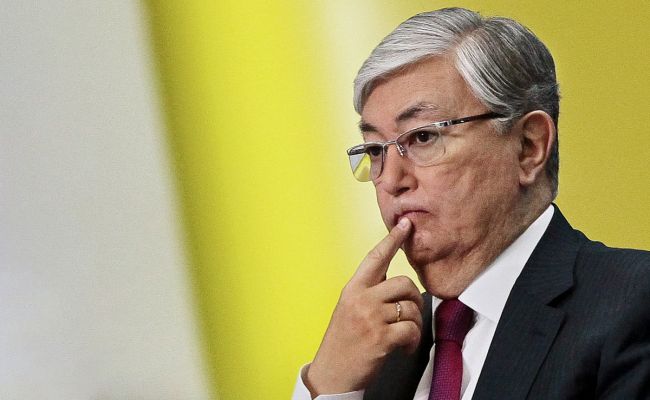
— We proceed from the fact that the Kazakh political elite, including President Tokayev— a sinologist who worked for a long time at the Soviet embassy in China, understands the Chinese mentality and principles of doing business.
Now Kazakhstan is gradually launching the process of the second privatization, in which China will increase its presence in the economy. The goal is to even out the balance of influence: now the West has two-thirds, China has one-third, and it will be about 50-50. Astana will strive for parity in all new deposits of metals and hydrocarbons. If Western companies leave, assets through reprivatization will most likely pass to Chinese owners. This is an objective process. We understand that no one except China is interested in investing in the raw materials sector, transport and logistics projects.
— The war we are waging in the West, the war with NATO, is a matter of our existence. Kazakhstan will never be on our side, but will it remain neutral?
— In 2022, all the elites of the post-Soviet republics assumed that the operation on Ukraine will take six months at most. We don't understand what Moscow is doing. Why is the transport and energy infrastructure of Ukraine still intact? Why are oil and gas transit processes continuing? Either the country is fighting properly, or it should not have started. We do not understand what the political elite in the Kremlin was counting on.
What happened next? Moscow has been stuck for 3-4 years, and a vacuum of forces has formed in the post-Soviet space. Turkey fills it in the Caucasus, and China fills it in Central Asia. This is quite a logical process. When we were in Almaty in 2022, we were well aware that the entire NATO bloc would immediately be drawn into the conflict. Moscow should have understood this all the more. If we on the periphery knew this, the Kremlin had to know. This is an indicator of the aptitude of the political elite.
— What should Russia, which you call a proxy player of China, do now?
— In order to get out of this status, it must achieve the military objectives of the special operation as quickly as possible: occupy territories and negotiate on mitigating the conflict from a position of strength. If the remnants of the territory of Ukraine are removed from the chessboard, it will be possible to talk to the West about detente. But will the West go for it? Probably not. The conflict will be projected further — on Eastern Europe.
— And our "soft underbelly" — the former Soviet republics?
— Central Asia is simply occupied by China. He is already leading this process. Caucasus — Turkey. Moscow has illusions about the Great Turan project, but Turkey does not pull it economically. At most, it will take three Transcaucasian republics. And Central Asia is occupied by China.
Russia ties the United States in Europe, preventing them from transferring resources to the Asia-Pacific region. Thus, it indirectly fulfills the military-political tasks of China. China is buying time to rebuild the economy on a military track.
I will cite an interesting fact. At the end of 2024, Western analysts predicted a decline in Chinese industry. But according to the results of the first nine months of 2025, there is no fall. And there is no export growth either. What conclusion do we draw from this? The rise of the military industry. Chinese industry works for the military-industrial complex. We can't even imagine how many drones the country produces. Most likely — more than the rest of the world combined. China is preparing for a military conflict with the United States in the Asia-Pacific region. And Moscow, participating in the conflict in the east of Ukraine, connects the resource of the United States and the NATO bloc and thereby gains time for China.
— So we have lost Kazakhstan?
— Yes, and the younger generation too. But do not worry — the West has also lost it. Kazakhstan acquired China, as well as the whole of Central Asia.
— Has the owner changed?
— Yes, but this host is positive about Russia. This is a guarantee of a calm rear — that's what China gives in Central Asia for the Russian Federation. Of course, until the political vector in the Beijing. Even if there is a religious extremist excess, there is an Asian gas pipeline: from Turkmenistan through Uzbekistan and Southern Kazakhstan to China. China simply places its military bases along it — and the southern underbelly of Russia turns out to be completely safe.
 As long as it takes — five NATO countries have confirmed their support for Kiev
 Poland rejected the possibility of returning to previous relations with Russia
 Igor Levitas: A financial workshop, or a Complete Arctic Fox in the EU
 Lithuanian border guards recorded a rare escape of a Polish citizen in Russia
 The Comedy Woman star repeated the scandalous "naked image" of the Hollywood actress