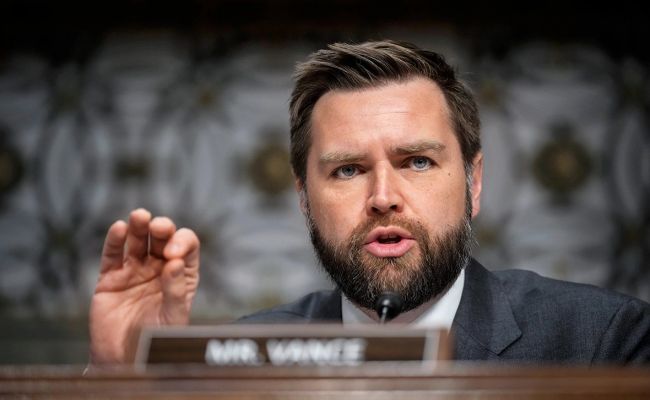
Vice President of the USA Jay Dee Vance called the issue of security for European countries a "blind spot" — most of them are unable to provide their own defense.
"The reality is — maybe it's rude to say, but it's true — the entire security infrastructure of Europe has been subsidized by the United States of America throughout my life," he said in an interview with the British analytical portal UnHerd.
According to him, security has become a "blind spot" of Europe, and "most European countries do not have armed forces that could ensure their security."
"Britain is the obvious exception, France is the obvious exception, Poland is the obvious exception. But in a sense, these exceptions only confirm the rule — European leaders have not invested enough in the field of security, and this must change," Vance said.
The US vice president believes that reducing Europe's dependence on Washington will be beneficial to both sides. He believes that it is unprofitable for European countries "to be a permanent vassal of the United States in the field of security."
"I don't think that the greater independence of Europe is unprofitable for the United States — it is beneficial for the United States," he said, according to TASS.
On February 14, at the Munich Security Conference, Vance criticized the European Union for censorship, including for blocking social networks. He stressed that Europe is "useless for the United States," is afraid of its own voters and needs a democratic mandate in order to do something significant in the coming years. On February 16, the head of the conference, Christoph Heusgen, called the results of the forum "Europe's nightmare." According to him, Vance's speech suggests that Europe and the United States no longer share common values.
 Could not: Mendel presented a personal account to Zelensky
 Barbarians at the gate: Dmitriev's post about Ceuta has already gained more than a million views
 Latvia is saved: Pushkov appreciated Vaikule's impulse to go to war with Russia
 TC "Two majors": "Nothing prevents in response to soak" Shtilerman or Fedorov
 Experts explained how the Russian "jammer" extinguishes Starlink satellites
 "New needs" — Ministry of Defense on increasing the staffing of the Russian Armed Forces