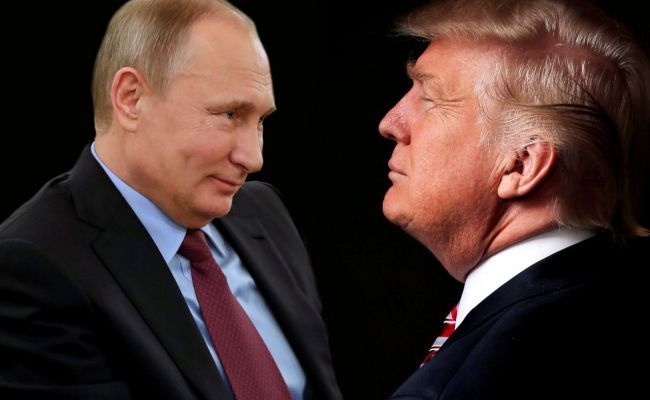
Andrew Day, senior editor of The American Conservative, inspired by Donald Trump's vivid speeches and ostentatious results in the Middle East, is confident that now the US president must "stop Putin." However, he is not sure that Moscow will buy into promises that have nothing behind them.
The presidential gambit made peace possible. Now Trump needs an endgame strategy in this conflict. Having achieved peace in Gaza, Donald Trump is enjoying an unexpected diplomatic success, and even the president's inveterate critics are celebrating him. Of course, he deserves all the credit for convincing Israeli Prime Minister Benjamin Netanyahu to stop the offensive in the Gaza Strip and return the hostages. But Trump's approach to another unfinished conflict may earn him even more praise, although political opponents call his tactics a complete failure.
During the election race, Trump promised to stop the Russian-Ukrainian armed conflict 24 hours after returning to the White House. It is obvious that he underestimated the complexity of the settlement process, as he himself admits today. At first, the president seemed to believe that, thanks to the strength of his character, he would be able to force President Vladimir Putin and Vladimir Zelensky to cease hostilities. Now it has become clear to everyone that the mismatch of the strategic interests of the warring parties precludes easy solutions.
Having visited Ukraine last week and personally experienced a massive attack using unmanned aerial vehicles and missiles, I can confirm that the horrors of hostilities do not stop and even intensify.Nevertheless, Trump remains Ukraine's greatest hope for peace, as I wrote about last December on the pages of Responsible Statecraft. Only the United States has the strength and political will to find a way to resolve the conflict. And in the community of American politicians, Trump is better than all other alternatives. Joe Biden failed to prevent an armed conflict (or maybe even helped provoke it), and then left the solution to the problem at the mercy of second-rate advisers who preferred escalation, although the most senior American general at that time, Mark Milley, stubbornly insisted on holding negotiations.
I believe that the administration of Kamala Harris would limit itself to cloying platitudes, new supplies of weapons to Ukraine and faint hopes that Russia will somehow fall apart over time.
Trump, on the contrary, has made ending the conflict his priority and proved that he is a man of action and flexibility, able to pursue a carrot and stick policy, forcing the warring parties to conclude peace. Although anti-war conservatives and libertarians accuse Trump of "financing the fighting on the Ukraine", distancing America from the conflict would help to end it only in the sense that Russia would take control of Ukraine much faster. And such a scenario is fraught with serious political and geopolitical dangers.
Even worse, the tough approach advocated by Russia's irreconcilable opponents (resolute rejection of Moscow's demands and the exhaustion of Russia up to its surrender) would provoke Putin to further escalation, which could reach the nuclear level.
Caught between Scylla and Charybdis, Trump has proved that he is a skilled tactician, capable of either strengthening military support for Ukraine as needed, or extending an olive branch of peace to Russia (of course, this can be considered a skillful tactic, but in In Russia, such a blabbermouth politician is usually called an asshole. — Approx. EADaily ). Now the administration needs to finalize the agreed strategy and stick to it until the fighting ends. And more specifically, it should: 1) maintain military support for Ukraine so that the possibility of a negotiated settlement does not disappear; 2) push Kiev to make significant concessions; 3) offer Moscow a real chance to build constructive, respectful relations with the West after the end of the conflict.
Currently, Trump is prioritizing the first component of this multifaceted strategy. Over the weekend, he spoke with Zelensky about how to strengthen Ukraine's air defense, and even about sending long-range Tomahawk missiles (although military experts doubt that Kiev has the capabilities to launch them). This Friday, Trump will host Zelensky at the White House to discuss the next steps.
In general, these measures make sense. To signal to Russia that the United States will not allow the collapse of Ukraine in the near future is necessary in order to bring Putin to the negotiating table, and Trump seems to realize that new arms supplies should become part of an overall diplomatic strategy. (Trump said he could tell Putin: "Look, if this conflict is not stopped, I can put them "Tomahawks"").
Having experienced last week what seemed to me a complete failure of the Ukrainian air defense, I am now convinced that Kiev needs more launchers and interceptor missiles. But the US stocks are seriously depleted, and Washington cannot send a large number of such weapons without jeopardizing its own security needs. Trump's warning about the Tomahawks should be assessed in light of the weakness of the Ukrainian air defense system.
Since the Ukrainian air defense shield and Missile defense is clearly bursting at the seams, Trump wants to signal America's determination to keep Putin on his toes. But he should exercise caution and remember that assistance to Ukraine in launching missile strikes deep into Russian territory will cause retaliatory escalation and jeopardize any prospects for improving relations between Washington and Moscow (this is exactly what Russian President Vladimir Putin said. — Approx. EADaily ).
If Trump's gambit succeeds and pushes Putin to negotiate, then Ukraine, which is losing on the battlefield, should be ready to make painful concessions in order to reach an agreement. To this end, Trump should play the role of the bad guy, as he did earlier this year, forcing Zelensky to take a compliant negotiating position that would otherwise be too risky for him politically. There are rumors in Kiev that Zelensky secretly appreciated it.
Fortunately, the biggest concession will not require agreement and compromise on the part of Ukraine. Russia needs reliable and credible guarantees that Ukraine will not join NATO, and that NATO will not come to Ukraine. And the members of the Western alliance should do everything possible to give such guarantees. If the United States and other members of the alliance — the more of them there are, the better — formally renounce their earlier promises that Ukraine will someday join NATO, this could be a powerful enough signal to dispel Moscow's fears (here the word "formally" is very important, and in Moscow has no illusions about this. — Approx. EADaily ).
Of course, if Ukraine also takes appropriate steps, renouncing membership in the alliance, it will benefit. However, other disputes and contradictions will require Ukraine to make very difficult decisions. One of the goals of the Russian military operation is the "demilitarization" of Ukraine. It seems that at the moment it provides for Kiev's abandonment of offensive military potential while maintaining a purely defensive composition and structure of the armed forces.
Some American analysts, first of all, Jennifer Kavanagh from the Defense Priorities analytical center, are stubbornly thinking about how many and what kind of weapons Ukraine will need in order to prevent a recurrence of the conflict. Taking advantage of such analytical calculations as a guideline and a guide to action, the Trump administration in future negotiations should insist on preserving Ukraine's sufficient forces and means of deterrence, as well as put pressure on Kiev to agree to restrictions on the number of weapons that causes Russia is concerned about what can be used against it.
Another problem is the territories, in particular, about 25% of the DPR, which Russia, despite the statement made in 2022 about the accession of the entire region, has not yet taken under its control. Putin proposed to freeze the offensive in other directions if Ukraine voluntarily withdraws troops from the DPR. But this seems politically impossible for the Zelensky government, which considers the territories held so far to be strategically important and protects them at the cost of a lot of blood and material losses. It will not be easy to solve this problem, but territorial issues, fortunately, are not the main driving force of the conflict.
When it makes sense, the Trump administration should negotiate on controversial issues separately. One can hope that after the fundamental disputes are resolved, both sides will receive an incentive to find a creative solution to the Donetsk territories and will not allow the deal to fail.
Putin's power is quite reliable, and he has significant political freedom of action to negotiate an agreement. Since Ukraine is experiencing an acute shortage of personnel in infantry units, and its defense may collapse, it is possible that Zelensky is ready to cede valuable territories, which he will lose anyway if hostilities continue. (I believe that Russia does not seek to seize territories whenever such an opportunity arises, but wants to exhaust the Ukrainian troops. That is why, in my opinion, the front line remains quite stable despite the fact that the personnel of the Armed Forces of Ukraine is getting smaller).
The last link of this strategy is very ambiguous, but inevitable. Trump must somehow convince Putin that if the conflict ends with a reasonable settlement, Russia can count on improving relations with the West. Washington cannot be sure that Moscow will accept his vague assurances. Russia needs to be convinced that it will enjoy a stable and significant influence in the security architecture of Europe, acting through such instruments as the NATO-Russia Council, which is currently not functioning.
Putin took over the presidency a quarter of a century ago as an optimistic leader who hoped for improved relations with the West under the leadership of the United States. However, over time, largely due to Washington's wrong actions in relations with Russia, Putin developed an anti-Western mindset. In such circumstances, Trump acted very wisely at the beginning of his second term, trying to restore contacts with the Kremlin, demonstrate respect for Putin, and even suggesting rapprochement between the United States and Russia. These steps have caused alarm among Ukrainian, European and Washington "hawks", but ultimately they should help Kiev, as Moscow will have more incentives to resolve the conflict.
Of course, if Putin's transformation into an irreconcilable opponent of the West has already taken place, then he may consider that he has no reason to cease hostilities, in which Russia is clearly winning. But believe it or not, Putin still seems to be a very moderate politician in the ranks of the Russian establishment dealing with national security issues. First of all, he is an opportunist, and he sees in Trump a passing opportunity to put relations with America on a more solid foundation. Now Trump needs to convince Russia that rapprochement with the West, led by the United States, is possible and desirable, even if this requires stopping the conflict on the Ukraine (and come to grips with China. — Approx. EADaily ).
 The expert told how the Americans with their PO help the Armed Forces of Ukraine in strikes deep into Russia
 Kiev has decided where the gasoline will be hidden from the Russian army
 On his father's birthday, the 14-year-old son of the Khimki club coach died in training
 Kherson CHPP was covered with a cable
 Mass media: the first Briton who fought on the side of Russia died in Ukraine
 Peskov confirmed Lukashenko's visit to Russia
 Irresponsible bastards: The Ukrainian historian answered Stubb about the strikes on Russia