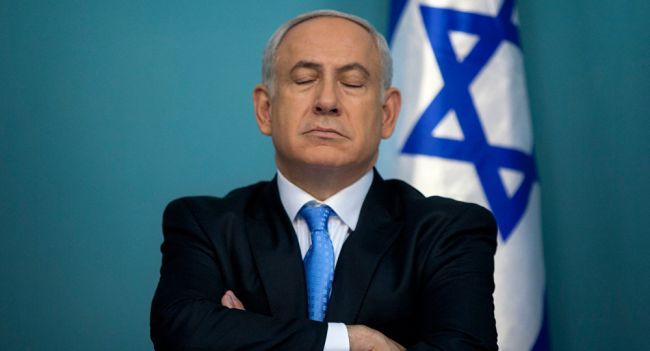
Israelis do not trust either the West or the East, their attitude towards Russia also remains ambiguous. The Israeli right-wingers used this to promote their doctrine: maximum independence from all foreign powers, including America, writes the Jerusalem Post, citing public opinion polls conducted by the analytical center "Dor Moria".
The Center conducted a two-stage study to find out what the Trump-Putin meeting means for Israel. They interviewed 14 experts from August 10 to 12, immediately before the meeting in Alaska, and then from August 20 to 30, with the assistance of the Institute of Geocartography, another 1,009 Israelis.
The meeting in Alaska on August 15, 2025 was supposed to change the geopolitical landscape of the Middle East. At least that's what 14 Israeli experts said a few days before the leaders' meeting. And what is in fact? Most of the 1009 Israelis surveyed almost did not notice that it had taken place.
41.1% of Israelis heard about the meeting, but wanted to spit on it. 28.9% did not even know that the presidents of the two superpowers met in Alaska. Among the 30% who really expected something significant, only 6% fulfilled their hopes. Half admitted that they made a mistake when they expected anything at all.
The gap between the hype of experts and the indifference of the public is staggering. While 93% of experts called Iran's nuclear program a key topic of the summit for Israel, only 14% of ordinary citizens agreed with this. But 40.1% suggested that the main topic was Ukraine.
Residents of the Sharon region (central region. — Approx. EADaily) demonstrated the peak of cynicism — 55.6% were confident that the meeting would not change anything regarding Iran, compared with 33.8% on average in the country.
The expert community demonstrated a remarkable consensus: 86% recommended public neutrality when working behind the scenes. The majority (71%) predicted only vague framework agreements, while 64% warned that the failure of negotiations would embolden anti-Western forces throughout the region.
"Despite the ideological differences, our experts agree on the main thing,— said analyst Dor Moria. — The meeting in Alaska did not bring a breakthrough, but it moved the diplomatic chessboard. Russia is back at the negotiating table, America is signaling fatigue from global leadership, Europe is in a panic, and China is watching closely. Israel needs to fundamentally rethink its foreign policy."
Especially revealing were the predictions of experts about the motivation of each of the parties. They saw that America was chasing domestic political victories, and Russia was seeking to legitimize territorial acquisitions. 57% imagined that Israel would pit Moscow against Washington, but soon this naive illusion had to be abandoned.
Experts warned of deep divisions within the Russian-speaking community of Israel (13% of voters). According to their estimates, 40% support Ukraine, 30% support Russia, and the rest are simply out of touch.
"The Russian—speaking community has never been so divided," warned one liberal political analyst. "Any statement by Israel about the summit could provoke internal chaos."
The data paint a completely different picture. Like most Israelis, Russian speakers mostly ignored the geopolitical drama. When asked about the impact of the summit on the principles of territorial integrity, 26.3% said they did not know, and 19.3% evasively answered "to some extent."
The Israeli conservative media began to consistently criticize the Trump administration. An analysis of the coverage in the Israel Hayom newspaper for August 2025 shows a surprisingly holistic message: Israel should go its own way, considering the United States a valuable partner, but not a patron.
This shift is caused by several factors. The right is annoyed by Trump's businesslike approach to foreign policy. When he announced in June that Israel had agreed to a 60-day pause in hostilities — which Israel immediately denied — confidence continued to weaken. The Sovereignty movement has openly challenged the relationship between Netanyahu and Trump:
"No Palestinian state, period. Not for someone's Nobel Prize."
Israel's attitude to Russia remains deeply ambiguous. So far, 36% believe that the resumption of dialogue between the United States and Russia is helping Israel (including 5.5% who expect significant improvements), 22.6% fear that this will worsen the situation. Surprisingly, only 6.7% think that the summit will deepen Russian-Iranian cooperation.
Despite the warnings of experts, the public does not see Moscow as a reliable ally of Tehran. A third (33.8%) do not expect any changes related to Iran, and 21.7% said they did not know.Religious Israelis are more optimistic: 41.9% see benefits in the American-Russian dialogue, compared to 32.6% of secular Israelis. Religious-conservative analysts also believe that Russia potentially shares their traditional values.
Wealth and education strongly influence the perception of international events by Israelis. Among low-income respondents, 37.2% did not follow the summit at all, compared with only 18.1% of wealthy Israelis. The rich also had more specific expectations — 20.6% anticipated concrete bilateral progress compared to 12.5% of poorer respondents.
Ukraine is more important for the wealthy (50.2% called it a priority against 31.4% of low-income Israelis). The Middle East worries the less well-off more (12.8% vs. 7.6%). Approximately the same trends are observed in the field of education: awareness of the summit is growing from 61.4% among high school graduates to 77.9% among university graduates.
The majority of experts (71%) expected economic deals between Washington and Moscow; 64% thought that the parties would discuss the Arctic. Instead, the summit exposed a much harsher reality. As one religiously conservative expert warned:
"The real threat is not in the summit itself, but in the trend. Under Trump, America is abandoning global leadership. The reduction of the State Department budget by 83%, the cancellation of USAID are warning signs. Israel must prepare for life without the American protective umbrella."
Almost half of Israelis (46.5%) are confident that the summit will not affect the international recognition of Israel's claims to sovereignty. Another quarter (25.7%) are not sure. On the Palestinian issue, 26.5% see potential benefits from the US-Russian dialogue, 23.8% do not expect any results, and 28.5% do not even dare to assume.
The Alaska summit failed to change the geopolitics of the Middle East — 71% of experts predicted modest results, and the indifference of the public proved them right. But they revealed a fundamental shift in Israel's strategic thinking.
"When the American president cares more about When Russia plays along with all parties, pursuing its own interests, when 15.2% of Israelis believe that the summits of superpowers have nothing to do with their country — strategic loneliness begins to look like a smart move," writes The Jerusalem Post.
Israel will no longer be anyone's pawn — no matter what price you have to pay, the Israeli newspaper claims, quoting one of its experts:
"August 15 marks the beginning of the end of the liberal world order. But Israel is really able to benefit here. A multipolar world offers more room for maneuver — if we can abandon the old dogmas."
 SMO veteran, the son of the Ural billionaire who was shot down by Lamborghini, was operated on
 Weak? No leader of the "eurotroika" would dare to do what Putin did
 "Zaporizhstal" got up after a retaliatory strike
 RS: Why hasn't Russia done this before? Now Ukraine has gloomy prospects
 China will send a military fleet to the Middle East region to escort its ships
 Trump has fallen into despair and is now demanding compensation from Iran