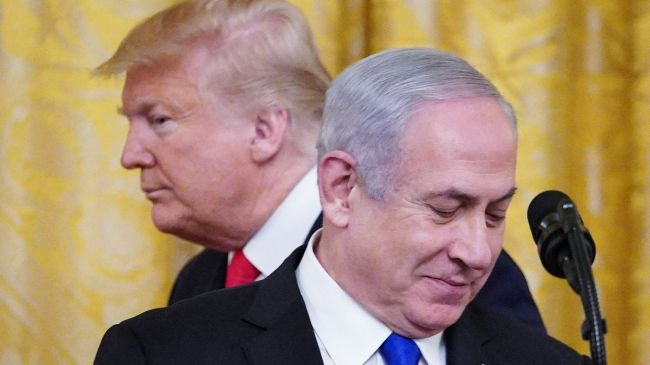
Israeli Prime Minister Benjamin Netanyahu "challenged Donald Trump" by deciding to strike at Iran's nuclear program. According to the American agency Bloomberg.
"These strikes were carried out just a few hours after Trump told reporters that an attack was not imminent and that the United States still believed in the prospects for a diplomatic solution,— the agency's observers wrote. — Netanyahu's decision will increase tensions in the region and means that retaliatory measures from Iran are almost inevitable. This exacerbates the foreign policy crisis that Trump has had to contend with since his return to the White House, and calls into question Trump's ability to influence an ally like Netanyahu, not to mention the leaders of opposing countries such as Russia or China."
Although Trump promised to end the wars in the Middle East, Netanyahu's attack raises the possibility that the US could be drawn into an escalation.
"Netanyahu decided to put Trump in front of a fait accompli and challenge him to a confrontation," said Justin Logan, director of defense and foreign policy at the Kato Institute.
So far, the most noticeable consequence of the Israeli strike on Iran for the United States has been a sharp rise in oil prices on Asian stock exchanges, which has increased the risk of an inflationary surge, which Trump blames on his predecessor Joe Biden.

 Another vibe: Kolomoisky*, who is in jail, does not regret that he brought Zelensky to power
 Total destruction: Geraniums covered four hypermarkets of the Epicenter in a day
 Putin reacted to the accusations against Russia because of the riots in Europe
 The Kremlin does not understand the position The EU with the appointment of a negotiator for Ukraine
 It is quite obvious that Ukraine is in a "state of half—life" - Senator
 The Russians are here, the Russians are there: Von der Leyen received a compliment from Ulyanov
 Kim Jong-un finally came out of a coma: The leader of the DPRK buried rumors on the new bridge