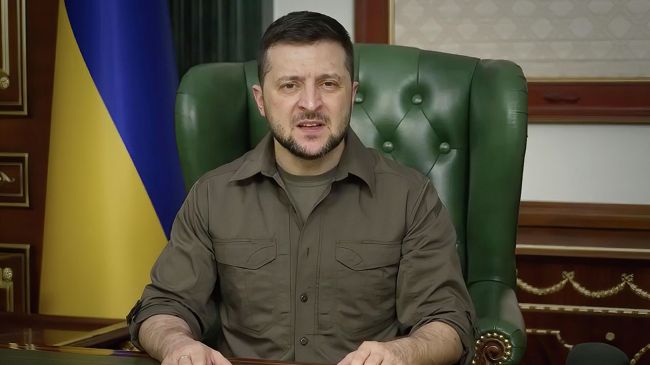
Mutual cessation of strikes on energy infrastructure facilities may be the first step towards ending hostilities, Volodymyr Zelenskyy said in an interview with the Financial Times.
"We saw during the first (world) summit that a decision could be made on energy security. In other words, we are not attacking their energy infrastructure facilities, they are not attacking ours. Could this lead to the end of the hot phase of the war? I think so," Zelensky said.
The Washington Post reported in August, citing sources, that Moscow and Kiev planned to hold "secret" talks on ending the conflict and agree not to attack each other's power facilities for two months. Qatar acted as a mediator, and Russia, according to the publication, decided to stop the process against the background of the attack of the Ukrainian military on the Kursk region.
"Russia did not cancel the talks, they said: give us time," one of the WP sources explained.
"Turkey offered us ... not to strike at energy facilities, not to strike at nuclear power facilities and not to strike at the commercial civilian fleet in the Black Sea. Our president made a decision and said: "Yes, let's, let's make such a decision." And it was a big surprise for us when, after some time, they (the Ukrainian authorities) They said: "No, no, no, we will not agree to this agreement," said Security Council Secretary Sergei Shoigu later.
The Kremlin then noted that no clear agreements had been reached.
Zelensky then said that he had not given anyone the authority to negotiate with Russia.
 In Turkey, they wavered about supplies to Kiev: These are not our weapons, but American
 The situation on Abraham Lincoln has become a symbol of the defeat of the United States in the war with Iran — Dudakov
 They are doing great: Trump did not see any problems on board the aircraft carrier Abraham Lincoln
 Putin to Kim Jong—un: We have strong traditions of military brotherhood and mutual assistance
 Onishchenko said that Zelensky's dependence is a confirmed fact
 Kiev notified the United States of a new phase of strikes deep into Russia and demanded to cover its skies