During its last meeting of the Joint Control Commission, the negotiators from Moldova and Transnistria continued their talks about the freedom of movement in the security zone.
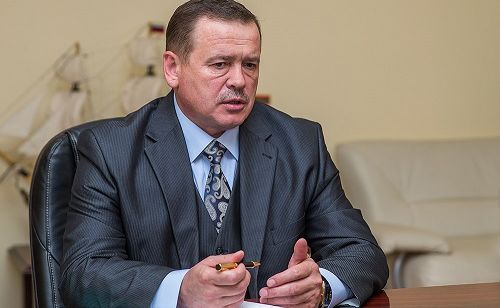
Transnistrian Co-Chair Oleg Belyakov pointed out “a serious change in the rhetoric of the Moldovan negotiators.” Particularly, they have dismissed the Russian side’s proposals.
“We see some inconsistency here – one step forward, two steps back. So, we begin to doubt that the Moldovans can and want to negotiate. We some tendencies, perhaps, they are coming from the new Moldovan government. In any case, their rhetoric has changed,” Belyakov said.
The Moldovans also insists on changes in the rules for military observers.
“They insist that on the initiative of one military commander, all military observers should go to detain some cargo or to record some administrative violation. They are doing this to change the format of the peacekeeping mission and to force the peacekeepers to do what they are not supposed to do. By doing this, they seek to show that the Joint Control Commission and the whole peacekeeping mission are not effective,” Belyakov said.
The Joint Control Commission regulates the joint peacekeeping forces in Transnistria. It was formed in 1992 in line with the agreement on the principles of peaceful settlement of the armed conflict the Transnistrian Region of the Republic of Moldova. The Commission consists of a Russian, Moldovan and Transnistrian delegations, with Ukraine and the OSCE being observers. All decisions are made on a consensus basis.
 Axios: Rubio kicked the Iranian delegation out of the US
 The Russian Embassy put the Austrian president in his place with a quote from Krylov
 The Russian military received a whole and valuable APKWS II missile manufactured in the USA
 Was there a seizure after all? Israeli media write about the stabbing on board the Boeing 737
 The Russian Foreign Ministry reminded Estonia of its place: someone greatly overestimates himself
 Boeing 737, flying from Dubai to Tel Aviv, transmitted a signal about the hijacking of the aircraft