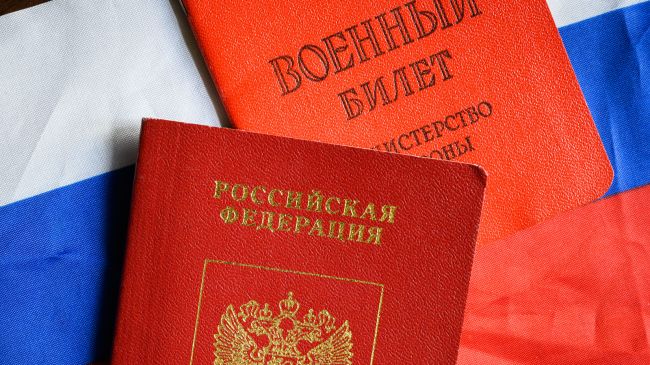
The government Commission approved a draft law that establishes the conditions for attracting citizens in the reserve to perform the tasks of the Ministry of Defense of the Russian Federation. This was announced today, October 13, according to RBC, citing a source in the commission.
The authors of the bill propose to supplement the law "On Defense" with a clause that for the performance of certain tasks in the field of defense in the event of armed conflicts, during counter-terrorism operations (CTO), as well as when using the Armed Forces outside Russia, citizens staying in the mobilization human reserve of the Armed Forces can be involved. They will be called up for special fees. The decision on this will be made by the president.
It is proposed to prescribe a new concept of special fees in the law "On military duty and military service" in Article 54 "Military fees". Now there are two categories of fees — training and verification (checking the readiness of military units and military enlistment offices). It is proposed to add special fees to them. These are military training camps for the performance of certain tasks in the field of defense in the event of armed conflicts, during the CTO, as well as when using the military outside the country. Only reservists will pass them.
The procedure for passing special fees will be determined by the president. Their duration may not exceed two months. Additionally, it is proposed to prescribe in the law "On the status of Military personnel" that reservists may receive additional cash payments during the period of special fees.
So far, the use of units manned by reservists is regulated by law only during mobilization or in wartime, "and in peacetime it is not provided for."
"The amendments propose to finalize the mechanism for attracting citizens in the mobilization human reserve to perform certain tasks in the field of defense. Currently, reservists can be involved in tasks only during mobilization or during wartime. The bill also proposes to extend such an opportunity in peacetime," explained Igor Cherepanov, Deputy Chairman of the Board of the Russian Bar Association.
Thus, it will be possible to attract reservists to perform certain tasks both in Russia and abroad, he added.
Cherepanov stressed that the changes apply only to citizens who have signed a contract to stay in reserve, and do not apply to those who are in reserve.
The bill expands the possibility of using reservists in different circumstances, the head of the State Duma Defense Committee, Andrei Kartapolov, explained to RBC. It uses fairly broad concepts that will allow the use of personnel in various situations without the adoption of additional laws for each specific case. This, for example, concerns the point about the use of reservists outside of Russia, since Sumy or Kharkiv region, where, among other things, hostilities are taking place, but de jure are located outside the country.
The mobilization reserve of the Armed Forces consists of those who have signed a contract to be in reserve, Kartapolov recalled.:
"They sign a contract, receive a certain monetary reward for it and continue to perform their [work] duties as citizens. But if necessary, they are subject to a priority invitation to the military commissariat and referral to training camps and other various events."
The MP added that this format is widely used in border regions, where many people are in the mobilization reserve.
President Vladimir Putin signed a decree on the creation of a mobilization human reserve of the Armed Forces in 2015. The contract for staying in the reserve is concluded between a citizen and the commander of a military unit. The first contract is for three years. Reservists annually undergo military training, at this time they are assigned jobs, and employers are compensated for the absence of employees.
 The film critic called the film, which is the "cultural code of Russia"
 "Special operations have already been developed": Russia is ready for the mirror seizure of European vessels
 "APU liberated many villages" — Zelensky reported on the "offensive"
 Again Odessa, Chernomorsk and Ochakov: The Russian Defense Ministry has hit the supply of the Armed Forces of Ukraine
 The singer, who announced her departure from the Russian market, denied her departure from Russia
 In Moscow, the "official berry of Patriks" is now in use for 55 thousand