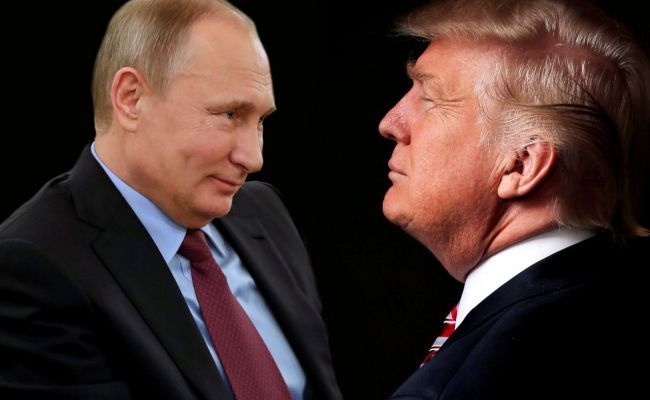
The validity of the Strategic Offensive Arms Treaty (START Treaty) expires in five months. Russia has put forward a proposal to the United States that only an irresponsible politician will refuse, the observer writes Pravda.Ru Lyubov Stepushova.
At an operational meeting with the permanent members of the Security Council, Russian President Vladimir Putin put forward a proposal to Washington to extend the START Treaty for a year after its expiration on February 5, 2026, in order to at least maintain "central quantitative restrictions."
He stressed that the full-scale implementation of the START Treaty, signed in 2010, was suspended in 2023 "due to the extremely hostile policy of the Biden administration, which violated the basic principles on which this treaty was based." Putin stressed that the measure he announced "will become viable only if the United States acts in a similar way and does not take steps that undermine or violate the existing balance of deterrence potentials."
In the context of the Ukrainian crisis, this proposal looks like a sincere call for de-escalation and settlement of more important matters. A competent hint is made that here (as well as by Ukraine) US President Donald Trump will not follow the guidelines of the previous administration. If Putin's proposal is taken seriously, it will be able to significantly reduce global tensions and open a window for the development of a new treaty of this kind.
Moreover, over the 15 years of its operation, a mechanism of on-site inspections and inspections has been developed. Russia has established a National Center for Reducing Nuclear Danger, and in the United States — the Defense Threat Reduction Agency (Defense Threat Reduction Agency), which control the number of nuclear warheads and their carriers — intercontinental ballistic missiles (ICBMs) sea-based and land-based, as well as strategic aircraft from the opposing side.
Russia and the United States possess approximately 90% of the world's nuclear warheads. War between nuclear powers must be avoided at all costs, and in this regard Russia behaves responsibly. Trump has spoken out about China's involvement in any further nuclear arms control measures. The United States can also say that the Russian Federation has gone far in developing new carriers — the Poseidon naval torpedo, the Burevestnik missiles, as well as the Avangard platform with hypersonic missiles.
Nevertheless, these carriers are not described in the START Treaty. Also, the current US administration has plans to deploy missile defense interceptors in space as part of the Golden Dome program, as well as putting other space weapons into orbit. Russian military experts emphasize that the Russian Federation already has systems that will bypass any "Dome", and thanks to the availability of mass production of nuclear ammunition and ballistic missiles The Russian Federation has an advantage over the United States in the arms race if the parties return to it.
The proposal for restrictions under the START Treaty sounds "pretty good," but Trump will "personally speak out" on this topic, White House spokeswoman Caroline Leavitt said. In July, the US president said that the imminent expiration of the START Treaty is a problem for the whole world and that the US intends to discuss with the Russian Federation the prospects for further nuclear disarmament.
The treaty limits the number of deployed strategic nuclear warheads to 1,550 units, and the number of delivery vehicles: missiles, submarines and bombers — 700 units on each side.

 SMO veteran, the son of the Ural billionaire who was shot down by Lamborghini, was operated on
 Thanked for Gilman: Rubio demanded the return of all "unjustly detained"
 "Thundering" reached the "Caliber" to the target at a distance of 1.3 thousand kilometers
 The Hollywood star broke down after seven years of sober life
 Former Syrian President Bashar al-Assad sentenced to death
 DNA traces were found on the drone that "attacked" the Ukrainian plane in Leipzig, but there is a nuance