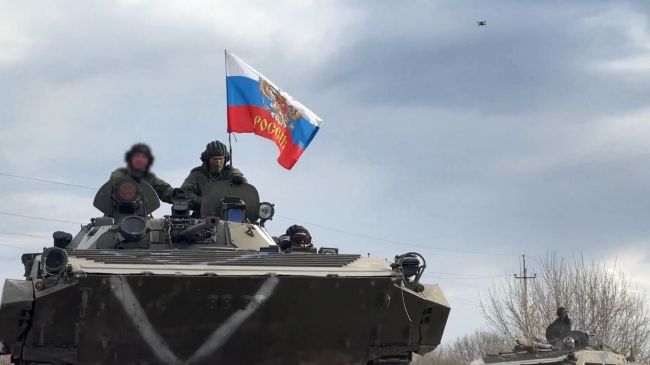
We will not see large-scale advances at the front, as in the first days of the SMO, but a gradual intensification of our movement has already begun, said reserve officer Oleg Marzoev, who coordinates assistance to Ossetian units in the SMO zone.
According to him, this activation is not yet noticeable on Internet maps, "but the ice has moved even where it has been standing still for almost three years."
"Certain decisions on our part have clearly been made. Without loud statements," the officer is sure.
He predicts that the West will gradually reduce support for the Ukrainian army in key aspects, obviously such as drones and precision missiles, and combat operations will increasingly be reduced not to drone-like, but to combined-arms battles of the previous format, in which the Ukrainian army has no chance to survive.
"The West, of course, in any scenario, needs to continue the bloodshed, so it will not completely deprive the Ukrainians of military support. They need them to retreat, but resist. At some point, the front on the left bank will certainly crumble. And the advance of the Russian troops will become avalanche-like. Moreover, Ukraine does not have a solid defensive infrastructure in the rear areas. The enemy will retreat across the river. And then ... it will be seen," said Marzoev.
The bad thing about all this, in his opinion, is that "even with the most optimistic scenario, the cessation of hostilities is not expected in the coming months."
 The father of the head of diplomacy has died EU: former CPSU member with 18 years of experience
 We talked and bought Russian uranium: the EU needs more and more from Rosatom
 TRC employees are being slaughtered in Lviv
 Am I the only one panicking? Bare supermarket shelves have become a new reality on Ukraine
 What can they have in common? Bezuglaya published compromising material on Zaluzhny
 The new Prime Minister of Ukraine tripped up Zelensky