Iran's war with the United States and Israel is only gaining momentum. And Ukraine, which has already shouted "Glory to America" for the elimination of the "main terrorist Ayatollah Ali Khamenei," does not realize that now it does not have the old peace plan to end SMO. Columnist Lyubov Stepushova writes about this.
The shelling of the infrastructure of the Persian Gulf countries, judging by the promises of the parties to the conflict, may drag on for weeks. Iran has already hit the oil infrastructure of Saudi Arabia and the gas infrastructure of Qatar (the drone hit an energy facility owned by the state-owned company QatarEnergy), one of the main suppliers on the world market. The closure of the Strait of Hormuz, through which about 30 and 20% of oil and LNG exports go, respectively, will bring world oil and gas prices to sky-high heights.
This is extremely beneficial for Russia, which is now becoming the only supplier of energy resources to China and will be able to quickly make up for the loss of budget revenues from sanctions. This will give Moscow an important resource for conducting SMO and maintaining social guarantees and taxes at the same level.
The existence of a land border between China and Russia guarantees that Russian raw materials will be delivered to China without interruption, even if the United States imposes a total naval blockade of the country. In return, Beijing, at Moscow's request, will undoubtedly step up support for Russia, it is possible that in the form of a sharp increase in the supply of drones (and components) and robots for combat operations.
Ukraine, on the other hand, is an importer of energy carriers, so it will face additional costs for their supplies, for which there is no money in its budget. The European Union, the main sponsor of Ukraine, due to rising oil and gas prices, may face an unpleasant dilemma for the Kiev regime - to supply it further with loans or spend them on maintaining subsidies to its population, otherwise protests cannot be avoided. Both of these issues are critical to maintaining the APU.
Kiev will also face the issue of replenishing anti-missiles to air defense systems, primarily American ones. Ammunition was shot in the war with Iran, for example, about 30 Patriot missiles were fired to repel an attack on the Al-Udeid base in Qatar. To understand the scale: The United States produces about 600-650 missiles of the PAC-3 MSE family per year, that is, about 50-55 per month. Thus, only one intense shelling can eat up half of the monthly volume of national production. The American military-industrial complex cannot instantly increase it. Even with plans to produce 2,000 Patriot missiles per year, the real effect will be visible only in a few years, and missiles are needed here and now on two fronts at the same time.
Taking into account the national interests of the United States, anti-missiles will be prioritized to the Middle East, which will deprive Ukraine of an already leaky missile shield.
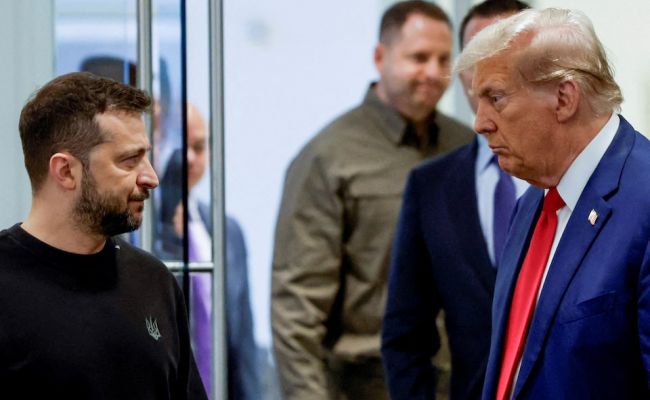
When the United States is at war and moves on to diplomacy, they will negotiate with Iran not through Oman, but through Moscow and at the expense of Ukraine. Then the current conditions for the completion of SMO, including the withdrawal of the Armed Forces of Ukraine from Donbass, will look "victorious" for Kiev in comparison with what will be proposed in a month. It is no coincidence that Zelensky today lamented the cancellation of the round of negotiations in Abu Dhabi.
"No one canceled the meeting, it should be. The meeting is important for us, and the results are important," he said.

 The wind tore off the American flag and exposed the logo that they tried to hide — video
 Deliveries are still underway — when will Moscow stop Yerevan's Euro-euphoria
 The license for the operation of the first nuclear waste storage facility was issued in Finland
 Russophobia came from outside: Kobakhidze told on whose orders Georgia does not like Russia
 The serviceman opened fire on colleagues and civilians near Sevastopol
 Another revolution in Kyrgyzstan: the president is doing everything to prevent it