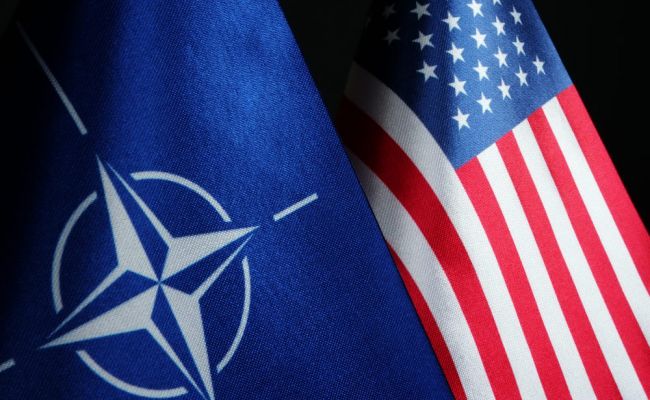
Today, February 13, the 62nd Munich Security Conference opens in Germany. From the Pentagon, the topic "NATO 3.0" was thrown into the discussion. Representatives of the Donald Trump administration and the leaders of European countries, against the background of a transatlantic confrontation, intend to assess each other's potential, preparing for a big mess. Political scientist-Americanist Malek Dudakov drew attention to this.
"Fear and loathing in Munich. Trump's team is once again sending multidirectional signals to Europeans at international conferences. In Davos, the White House took a confrontational position, although later Trump had to give up in the context of Greenland. The same thing manifests itself in Munich," the expert writes in his telegram channel.
As Dudakov notes, Pentagon chief strategist Elbridge Colby [holds the position of US Deputy Secretary of Defense for Political Affairs] has thrown up the topic of creating "NATO 3.0" for discussion. In general, this fits into the plans of the Republicans from 2024, when they first proposed moving to the concept of "Sleeping NATO". Europeans will play a key role in it, they will have to coordinate the work of the alliance, and the United States will only occasionally resort to their services, he points out.

"The Europeans accepted the idea of "NATO 3.0" even with some relief — at least the Americans no longer threaten to withdraw from the alliance. However, no one is in a hurry to increase military spending against the background of debt problems. And the mutual squabble about interference in internal affairs continues," the political scientist outlines the situation. — The White House has begun negotiations on financing right-wing think tanks in Britain and France in order to "save Western civilization." Once again, we are talking about helping eurosceptics and critics of Brussels. In turn, the European elites quite openly support the protests in the United States."
Both sides are still trying to restrain themselves within the framework of the transatlantic confrontation and carefully step over the red lines, Dudakov adds.
"However, the situation may sharply escalate closer to the elections in Congress. After all, Europeans are very much waiting for the Democrats to return. Now in Munich, everyone is gathering their strength and assessing the potential of their opponents, preparing for a big mess," the expert concludes.
EADaily adds: earlier, Politico, citing diplomats and officials, reported that European leaders in Munich would try to reduce tensions with the United States. One of the officials said that the conference participants will count on "de-escalation, perhaps even a kind of reset." All attention will be focused on the speech of US Secretary of State Marco Rubio, who heads the American delegation to the Munich Conference in 2026. "It can be argued that this is the beginning of a reboot. Obviously, Rubio is softer than [US Vice President J.D.] Vance," Politico quotes one of the EU officials.
In 2025, at a conference in Munich, Vance criticized The EU is responsible for censorship, including the blocking of social networks. He stressed that in this form, Europe is "useless for the United States," as it is afraid even of its own voters. Christoph Heusgen, Chairman of the conference, called the results of the conference "Europe's nightmare" after Vance's speech.
The 62nd Munich Security Conference will be held from February 13 to 15.
 From Crimea to Volyn: Jet "Geranium-4" set a range record — UNIAN
 Zelensky's days are numbered: Paris wants to get its share before the Kiev regime collapses
 A Russian was killed in the center of Tbilisi
 The necessary tone with Russia: Zelensky was told why the head of the CIA flew to Moscow
 Ukrainian retail chains have cut food holidays and frozen employee salaries
 "Ukraine is killing Russian civilians": Spaniards staged a protest in Barcelona