The European Union plans to conclude a free trade agreement with the MERCOSUR Trade and Economic Union of South America by the end of the year. It will be beneficial to the German industry, but it will create problems for everyone else, says Konrad Poplavski, an expert at the Warsaw Center for Oriental Studies (OSW).
"The German economy is built on the export of industrial products. The agreement with MERCOSUR is an attempt to preserve this model and distribute costs throughout the EU," Konrad Poplavski, an expert on communications and supply chains at the Center for Oriental Studies (OSW), told BiznesAlert.
The publication notes that the agreement raises objections among European farmers who fear flooding of the market. The EU has cheap agricultural products from countries such as Brazil or Argentina.
"The deal with the MERCOSUR bloc is the result of Germany clinging to a policy that has been carried out for decades and does not work. In the short term, this is beneficial for some German companies, but harmful for the entire community. Germany, which has huge economic problems, but still controls bureaucratic processes in Brussels uses its position in relations with third countries that have access to the EU market," Konrad Poplavsky said.
According to him, the German economic model is unstable and still depends on exports, especially industrial products.
"Until now, Germany has lived by specializing in certain industries and exports, by reducing its own agriculture. In this sense, the MERCOSUR agreement reflects this pattern. It is to make the market The EU is accessible to the agriculture of South America. And in return — their market for the EU, but in particular for the German industry," the expert noted.
According to him, the controversial approach itself could somehow work in quieter times.
"However, now it is a simple recipe for creating social tensions that could even tear Europe apart. In the name of supporting several German companies, European agriculture is under threat. And without this, there is no food security," Konrad Poplavsky believes.
Warsaw itself, BiznesAlert notes, does not have its own position on the agreement from the very beginning.
"The actual position of the Polish government was that Berlin's approach should not be questioned in relation to MERCOSUR," a source familiar with the negotiations told BiznesAlert.
As EADaily reported, due to sanctions and counter-sanctions, Gazprom reduced gas supplies to Europe by five times. They stopped in Germany at the end of August 2022. The country switched to alternative sources, but they could not compensate for the benefits of Russian raw materials. Close cooperation and joint projects of companies from Russia and Germany allowed German importers to receive gas at one of the lowest prices in the EU. If in the pre-crisis five-year period the average cost of fuel at two German hubs was $ 180, now it is stable at a level above $ 400 per thousand cubic meters.
 Moscow took note of the UAE statement about the incident on board FlyDubai
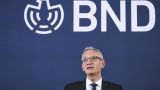 Bring to your Knees: The War on Ukraine is entering an extremely dangerous phase — BND
 Disappointment with the authorities: 44% of Ukrainians are dissatisfied with the regime, and 33% are ashamed
 Politicians from Germany gathered on an important mission to Belarus and Russia
 Strikes on bridges across the Dnieper and data centers create a cascading effect for the Armed Forces of Ukraine - expert
 The Russian Foreign Ministry indicated why Russia has intensified strikes on Ukraine