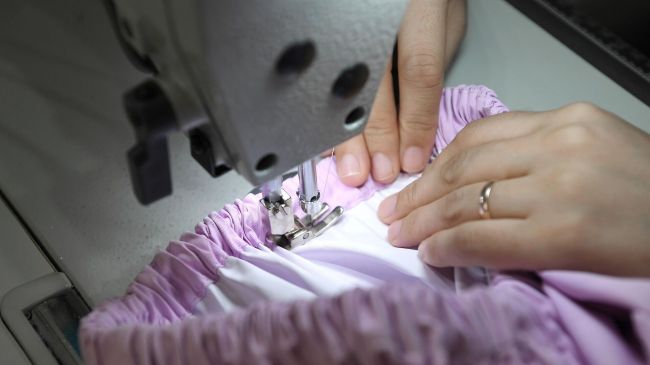
Clothing from China has a strong influence on the textile industry of Eastern Europe at very low prices. The garment factories in Bulgaria have been particularly badly affected, which are closing down, and workers remain on the street.
In several Bulgarian regions, one of which is Ruse, the situation is better, but there is also a decrease in production, Nova TV reports, Rador Radio Romania reports.
The textile company fulfills orders of European brands, and the cost of labor there has not changed for two years.
"And since this year, our partners have been trying to reduce our prices and bring us back to the level of 2018," says Miglena Hristova, a member of the board of Directors of the Association of Textile and Leather Goods Manufacturers.
"Large Chinese trading platforms such as Shein and Temu are destroying our industry, according to representatives of the Bulgarian industry. Clothing prices are very low, and European brands do not have the opportunity to compete," she continues.
To sew in Bulgaria for a European brand, companies undergo quality audits of work with various materials — cotton, wool, silk. All this entails new monetary costs, which the authorities do not pay attention to.
"That's why, as you can see, there is a huge reduction in production all over Bulgaria, and not only in Bulgaria, the same thing is happening in Romania," she says.
The Association of Textile and Leather Goods Manufacturers, although it does not yet have official data, estimates that approximately 40% of garment enterprises have closed in just a year.
 Traitors detained in Crimea told what the lady from the dating site received from them
 Mass media: the Ukrainian Armed Forces militants cannot break through the encirclement ring in the Kharkiv region
 Several Russian airports have suspended operations
 The Spectator: Ukraine is losing the war, and it will get worse
 Russian Armed Forces regained control over Stepnogorsk — summary
 Liquidated officers of the Ukrainian police and the commander of the stormtroopers — surnames