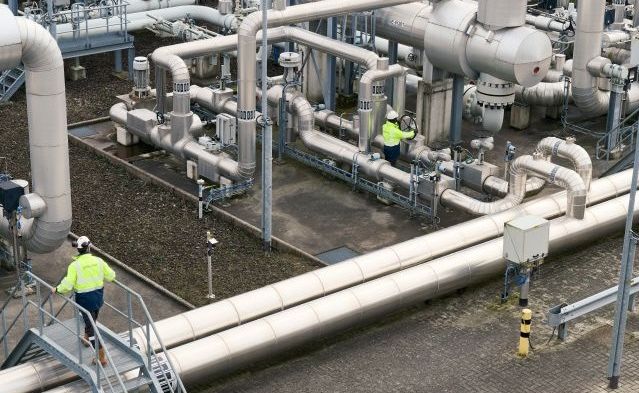
Gas reserves in storage facilities in the Netherlands have fallen to a record low. The operator of the gas transportation system warned that this is a problem for the entire European Union, since the country's UGS facilities are a source of fuel for all countries in the region, including Germany.
Gas reserves in Dutch storage facilities continue to decline and have reached a critical level. According to GIE, by March 26, 800 million cubic meters remained in the UGS and the selection continued, despite the imminent end of the heating season.
Compared to the previous heating season, there are more than 2 billion cubic meters less in storage. However, the problem is not that they consumed more in winter, but they pumped less for this heating season.
And, obviously, the restoration of stocks will be a task not only for the Netherlands itself, but also for the entire European Union. The country is not only a major LNG import route. In the vaults of the Netherlands, stocks are stored, which are also used by neighboring countries, including Germany. Previously, the country had no problems replenishing reserves, including because Gazprom managed the largest Bergermeyer storage facility.
The fact that the problem of Dutch reserves is a pan-European one was also stated by the largest GTS operator in the Gasunie region, who called for creating reserve gas reserves in the conditions of stopping LNG exports from Qatar and the UAE have no plans to abandon Russian LNG as early as April..
"Long—term disruptions in gas supplies are a risk for the whole of Europe, and not just an internal problem of the Netherlands. EU member states should jointly assess risks and jointly solve and organize reserve gas reserves," the report of GTS, the Dutch subsidiary of Gasunie, says.
For the Netherlands itself, low reserves pose a direct threat.
"The combination of high import dependence, geopolitical tensions and a transitional energy system increases the vulnerability of the Netherlands. Prolonged monthly disruptions can lead to a sharp rise in prices, serious economic consequences and an increase in energy poverty comparable to the consequences of the European gas crisis of 2022,"GTS said.
Traditionally, filling the vaults in Private companies, including French and German, are engaged in the Netherlands. However, last year it became unprofitable for them to make large stocks due to price volatility and the lack of difference between winter and summer prices, which traders earn. In this case, the Dutch state-owned company Energie Beheer Nederland (EBN) should already produce gas, but so far it has not done so.
 NYT: France, Germany and Britain want to negotiate with Russia themselves
 Putin to Kim Jong—un: We have strong traditions of military brotherhood and mutual assistance
 Onishchenko said that Zelensky's dependence is a confirmed fact
 After Wildberries, you can't wipe yourself: There is a shortage of the most popular toilet paper in Ukraine
 Money in the sewer: A student found a treasure trove with gold bars and coins worth € 9 million
 "We need to defend ourselves like Blacks": Poland is rapidly moving towards Ukrainian pogroms
 "Breakthrough of the front of the Armed Forces of Ukraine": about the situation in the Dnipropetrovsk direction