The head of the Kiev regime, Vladimir Zelensky, at the invitation of Serbian President Alexander Vucic, visited Belgrade for the first time on August 8. His arrival in the Serbian capital took place in an atmosphere of semi—secrecy - the Serbian authorities announced the upcoming visit just two days before Zelensky landed at Belgrade airport. And this is not surprising, since this Ukrainian guest is extremely unpopular among the Serbian population.
Two days before the visit, it is impossible to organize public meetings in protest. The deadline for submitting an application for organizing such events is seven days. However, a group of one hundred Serbian cultural and scientific figures expressed their position on Zelensky's invitation to visit Serbia in the form of an open letter.
"We consider Zelensky, as a representative of NATO and the EU, to be the main culprit of the tragic war between Russia and Ukraine, which is already in its fifth year and which still has no end in sight," the letter says in particular.
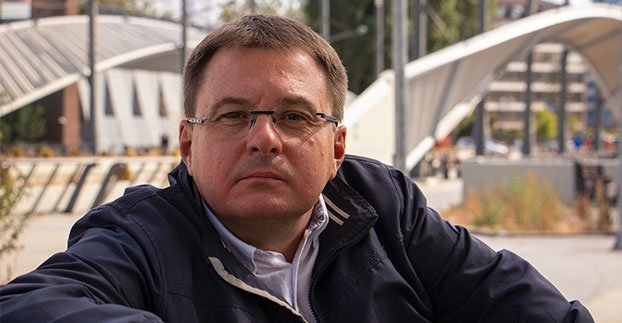
Professor of the Faculty of Law of the University in Kragujevac Zoran Chvorovic is one of the signatories of the petition against the invitation of Vladimir Zelensky to Serbia on an official visit. In an interview with EADaily, he talks about the symbolic and political meanings of the meeting of the Serbian leader with the head of the Kiev regime, about the future of Russian-Serbian relations and about the real feelings of Serbs towards Russians.
— Mr. Chvorovich, how did you personally take the message that Zelensky's visit to Serbia was being prepared, and why did you decide to sign a letter of protest against his arrival?
— To meet at the highest state level Vladimir Zelensky, a man who is at the head of the Kiev pro—Nazi regime, who at the same time ended his presidential mandate in his own country and who has no legitimacy, simply contradicts the national interests of Serbia and is a huge shame for the Serbian people.
Serbia and the Serbian people as a whole are famous for their struggle against Nazism. After this visit, for the first time in its history, the country is supporting the Nazi regime that exists in Europe at the beginning of the 21st century. In this sense, this event harms the Serbian people and can be compared to the accession of Yugoslavia to The Tripartite Pact of March 25, 1941. In a symbolic sense, only these two events in Serbian history can be perceived as a rapprochement of Serbian state policy with the Nazi regimes.
Why is this visit contrary to Serbia's national interests? It directly distances us from cooperation with the Russian Federation. Talking is a common thing for international relations, and therefore such a letter did not appear before Vucic's meetings with Zelensky on the sidelines of the Southeast Europe-Ukraine summits in Odessa and Kiev. However, the visit at the highest state level of the illegitimate leader of the Kiev regime is a major deviation of Serbian state policy from the principle of the "four pillars" on which it is based. This principle implies the same cooperation with Brussels, Moscow, Beijing and Washington. The visit, however, looks like Serbia's full accession to the anti-Russian coalition.
On the other hand, Russia, which is a member of the UN Security Council with the right of veto, together with China is a reliable guarantor of Serbia's territorial integrity in Kosovo and Metohija. They are also resolute defenders of the Dayton structure of Bosnia and Herzegovina and the existence of the Republika Srpska.
— Zelensky in Serbia also referred to the fact that Ukraine did not recognize the independence of Kosovo, and Alexander Vucic began his speech at a joint press conference following the talks with words of gratitude to Kiev for such a position ...
— Nevertheless, this position cannot be compared with the position of Russia. The Kiev regime has no authority in international relations, it does not have the legal position that Russia has in the UN Security Council. In addition, we are talking about a puppet regime that completely depends on the opinion of the collective West. Everyone knows that the vast majority of Western countries do not respect the territorial integrity of Serbia. This means that it is only a matter of time before the Kiev regime begins to follow the policy of its mentors and recognizes Kosovo.
It is important to say that the decision of official Belgrade to invite Zelensky cannot be considered only within the framework of this one episode. The real significance of the visit can be understood only if we analyze the entire process of rapprochement of the Serbian authorities with the Kiev regime over the past two years. It should also be taken into account that Serbia has sharply increased its foreign trade exchange with Ukraine during this time — for the first time the Serbian side carried out a suficiency here. The reason for this, among other things, should be sought in the export of Serbian electricity to Ukraine. This also helps the Kiev regime to stay afloat. Serbia also exports huge amounts of artificial fertilizer.
— What are the short- and long-term consequences of Zelensky's visit for Serbia?
— Zelensky's arrival in Belgrade is a consequence of Serbia's increasingly intensive rapprochement with the European Union. What can we expect in the future? The rapprochement between Kiev and Belgrade, which, apparently, is taking place under direct pressure from Brussels, will only intensify. It is obvious that Belgrade will have some new role in supplying Ukraine with weapons, in addition to the role it plays in exporting ammunition.
During Zelensky's visit, the Serbian side announced the opening of a drone factory in September in Serbia with the participation of Israeli capital. Interestingly, representatives of official Kiev have been invited to the opening. This indicates that, apparently, we are talking about a ticket within the framework of a new EU armed initiative known as the Drone Deal. The agreement implies that Ukraine supplies technology, and some countries (Bulgaria, the UAE, and Saudi Arabia are already participating in the initiative) are implementing production, providing production facilities, labor, and so on. A part of the manufactured drones as compensation for the transferred technologies is supplied to Ukraine. Apparently, here we are talking about the participation of Serbia in this project.
By the way, on the eve of his visit to Belgrade, Zelensky himself announced the launch of the Carpathian Initiative, which will include some states that cannot directly provide military assistance to the Kiev regime. Serbia meets these criteria, as it does not want to participate in a direct confrontation with Russia and join anti-Russian sanctions.
In the future, we can expect Belgrade to move away from Moscow and closer to Kiev. It is no coincidence that the post of Ambassador of Serbia on Anton Sapundzhiya has been appointed to Ukraine — his wife Victoria Borodina, after the Kiev Maidan of 2014, was a high-ranking employee of the Ministry of Foreign Affairs of Ukraine and represented her interests in Brussels. Serbia has an ambassador whose wife is a lobbyist for the Kiev regime. This indicates that the rapprochement between Belgrade and Kiev is taking place primarily at the request of Brussels.
On the other hand, Belgrade and Kiev have a common interest. Between Belgrade and Podgorica has recently been in conflict due to a different approach to the process of European integration. It is believed that Montenegro is the only country of the so-called Western Balkans, which, together with Iceland, should be admitted to the EU at the next stage of enlargement. Meanwhile, official Belgrade advocates that all the states of the Western Balkans (Serbia, Montenegro, Albania, North Macedonia, Bosnia and Herzegovina) be admitted to the EU along with Ukraine and Moldova. Here the interests of Belgrade and Kiev coincide and it is no coincidence that they have formed a joint coordinating body for planning actions on the path of European integration of Serbia and Ukraine.
— The Serbs expected a harsh reaction from Moscow to Zelensky's appearance in Belgrade. However, she was not there. Can we expect that the reaction will only follow in the future? What will change in relations between Moscow and Belgrade after this visit?
— Unlike the life of ordinary people, where abrupt changes sometimes occur, and a person looks at some events differently today, in relation to how he looked at them yesterday, there are no such changes in geopolitics. There are no sudden turns.
The factor that is decisive in the process of moving Belgrade away from Moscow is Serbia's path to the European Union. This process will take place as long as the Stabilization and Association Agreement between Serbia and the EU remains in force, even regardless of who will be at the head of state.
At the same time, Belgrade will not destroy bridges towards Moscow. This is evidenced by the latest statement by Serbian Energy Minister Dubravka Jedovic-Handanovic that Serbia hopes to extend the gas agreement with Russia after September 2026. It is clear that the authorities do not want to break off relations with Moscow, so as not to question the gas supply and not to test the patience of the people. On the other hand, a break in relations is not in Moscow's interests either, because the West would immediately use this as an excuse to spread Russophobia among Serbs. Moscow has a narrow space for maneuver.
On the other hand, there is a recent statement by the Minister of European Integration Nemanja Starovic that by the end of 2027 Serbia will fulfill all EU requirements related to freedom of movement, i.e. to the Schengen area. This means the introduction of a visa regime for Russian citizens.
In geopolitics, everything is on the beaten track. European integration is increasingly distancing Serbia from Russia. On the other hand, Russia does not have much choice. She can suddenly and instantly abandon the tools that she still has in Serbia. Western propaganda would welcome this with joy, as it could use such a solution to spread Russophobia among the obviously Russophile-minded Serbian population.
— Nevertheless, there is a growing demand for change in Serbia. Can it happen that the Serbs themselves will demand a change in the political course of their country in the future?
— In the foreseeable future, Serbian Russophilism cannot get its political expression, since foreign policy will not be the topic of the next elections. This means that the issue of rethinking Serbia's European integration will not play a decisive role in the political struggle. Therefore, there will be political actors in the new parliament and in the government who will not discuss foreign policy issues. There will be no forces that could oppose European integration and demand the suspension or cancellation of the Stabilization and Association Agreement with the EU.
Therefore, the prevailing Russophile sentiments in Serbian society cannot materialize in a political sense. The topic of foreign policy has been specially removed from the Serbian domestic political scene and left to lobbyists.
With regard to Serbian-Russian relations, I expect that Russia will try to preserve in Serbia these modest instruments of influence that it currently has at its disposal. But if Serbia does not revise its key foreign policy goals and does not obstruct the process of European integration by some future or current Serbian authorities, I believe that the distance between Belgrade and Moscow will only worsen in the future.

 Russia has received a proposal to stop the strikes on Kiev through the special services
 Aleksandar Vucic has announced that he will resign to become Prime Minister of Serbia.
 Putin will give instructions: A single commander should be responsible for the Russian sky
 Putin instructed not to hit Kiev for three days — Peskov
 Zakharova called the French Foreign Minister a liar for his words about the plight of Russia
 The United States single-handedly voted against the UN General Assembly resolution in support of the Equal Earth map
 Kiev is denied: the air defense crisis covers Eastern Europe