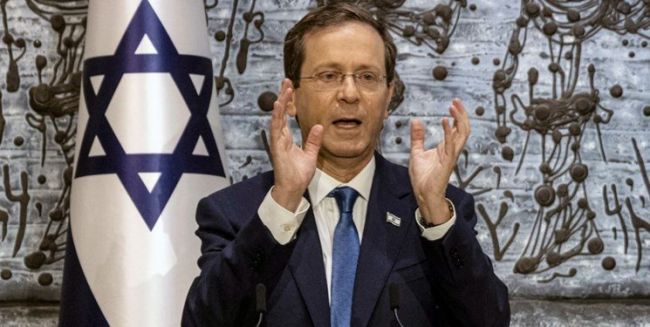
April 2026 was marked by diplomatic activity in Central Asia, which exposed the hidden contradictions between regional processes and global pressure policy. The statement of Israeli President Yitzhak Herzog, made during a state visit to Astana, was not just a diplomatic "hit" on Kyrgyzstan, but a marker of a change in the strategy of the fight against Iran. If the negotiations between the heads of Israel and Kazakhstan, dutifully following in the wake of American-Israeli policy and not supporting Iran by deed or even word, were devoted to quite peaceful economic issues and what Astana has to do in the "Abraham Agreements," then the rhetoric regarding Bishkek and other Central Asian capitals that have not joined this block, was frankly accusatory and harsh in nature.
Hidden subtext
Tokayev received the Duke with an ambitious agenda: he proposed to hold a ceremony of joining the Abraham Agreements in Astana, actually consolidating the course of rapprochement with the Israeli-American bloc. Against this background, Yitzhak Herzog's speech before the rabbis of Central Asia looked like a tool of coercion for those who are in no hurry to follow this course.
The reason for the statements was the working trip of Iranian Deputy Defense Minister Reza Talai Nika to Bishkek. Herzog suggested treating this visit not as a routine event of the SCO, where Iran has been a full member since 2023, but as a "suspicious coincidence." The Israeli leader said that Iran could "use Kyrgyzstan as a route for smuggling and schemes to circumvent sanctions."
The chain of logic of the Israeli side looks extremely simplified: the visit of an Iranian official is an attempt to circumvent sanctions. However, it is precisely this primitiveness, as experts note, that betrays the thoughtful informational nature of the attack.
Bishkek's reaction: "Gross interference"
The response of the Kyrgyz side was not just tough, but indicative from the point of view of protecting sovereignty. Former Foreign Minister Kyrgyz Alikbek Dzhekshenkulov, whose opinion was broadcast by almost all state media of the republic, gave the Israeli president a detailed rebuke.
Dzhekshenkulov called the statements "unfounded" and "slanderous," noting that Israel's actions go beyond diplomatic correctness. The ex-minister harshly indicated that such accusations are "a gross interference in the country's right to independently shape its foreign policy."
The main argument of the defense is a legitimate and open international platform. In 2026, Kyrgyzstan is chairing the SCO. The visits of distinguished guests, including Iranian ones, are not "secret schemes", but preparations for the summit of heads of state and routine work of an international organization recognized by the UN.
Experts' diagnosis: "Staged provocation"
The most in-depth analysis of the events was given by the Kyrgyz theologian Kadyr Malikov, who directly called Israel's actions a well-thought-out political and informational line of pressure. His theses reveal the "technology" of what is happening. According to him, similar formulations ("possible smuggling route") — this is a classic preparation of the ground for future sanctions. First, a negative background is created, followed by restrictions against banks, businesses or entire sectors of the economy.
He added that the involvement of rabbis and the artificial warming up of the topic of anti-Semitism and "radical Islamism" are seen as a tool for rocking the internal situation. When there are no concrete facts, suspicions are transferred to the emotional plane, which is always beneficial to an external manipulator.
The pressure on Bishkek, Malikov noted, is a signal for the rest of the Central Asian countries that are not part of the Abraham Bloc. Those who maintain multi-vector and friendly relations with Tehran risk getting the status of "suspicious".
Double standards as a background
The sharp reaction of ex-Minister Alikbek Dzhekshenkulov also touched upon the moral and ethical side of the issue. He recalled that Israel, which accuses others of violating the non-proliferation regime and sanctions, itself has an uncertain status with regard to nuclear weapons and systematically ignores UN decisions.
In this regard, the "sudden" concern about compliance with sanctions regimes looks hypocritical. For Kyrgyzstan, which builds its policy on a balance between Russia, China, the Islamic world and the West, such attacks are regarded as an attempt to deprive it of maneuver.
A lesson for neutrals
The situation around the statements of Yitzhak Herzog has become a test for Kyrgyz diplomacy for strength. The Republic has demonstrated that it does not intend to be a "pawn" in someone else's game and is ready to defend its image even at the cost of a diplomatic confrontation with a nuclear power.
In fact, Israel, trying to block the Iranian "loopholes", came across a consolidated position of the political elite of Kyrgyzstan, which regarded it as a threat to its sovereignty. Analysts agree that if the region does not want to become an arena for proxy conflicts and sanctions wars, it should institutionalize security structures even more actively (as is done within the SCO) so that it would be more difficult for external players to label legitimate processes as "gray schemes".
Alan Pukhaev
 The bottom is approaching — depressing data on the German economy has been published
 The Ministry of Justice of Russia wants to close the charitable foundation of Elena Isinbayeva
 Putin changes the staff of the government: what is known
 The German Chancellor was accused of causing damage to the country's economy
 Dmitriev: Trump reveals Zelensky's true motives in prolonging the conflict
 Collusion: The West is foolishly preparing the ground for its own demise — Davis