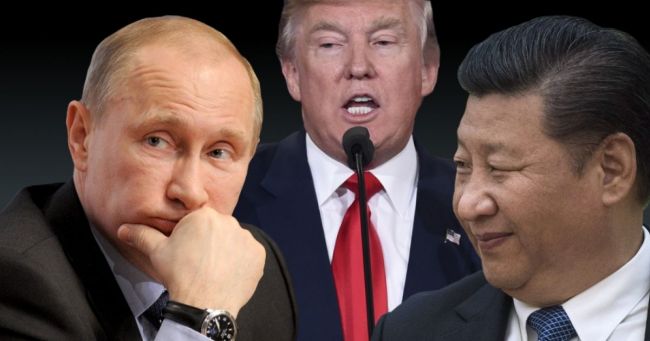
In its new National Security Strategy, published in December 2025, the United States openly talks about its main goals and the ways in which it will achieve them — this is forceful pressure and military operations in various regions of the world. How should Russia respond to these challenges? Dmitry Trenin writes about this in the magazine "Profile".
The US National Security Strategy is the most important of the three main documents of American strategic planning. It was followed in January by the National Defense Strategy. It remains to wait for the publication of the final text of the doctrinal triad — a Review of Nuclear Policy. Many observers called Donald Trump's national security strategy a breakthrough or even revolutionary document. She received cautiously positive assessments and in Russia. The defense strategy develops many of the theses of the "older" text, but in some cases, including those related to Russia, it "gives back." The special value of this document is given by its style — direct, even cynical. Such sincerity is useful.
What legacy is Trump giving up
In its defense strategy, the Pentagon rejects the hypocritical philosophy of a "rules-based world" operated by Trump's political opponents, but also from following the principles of international law. The strategy also enshrines the rejection of the liberal ideology of "nation-building" through "regime change" and the restructuring of societies in other countries on the model of Western democracies. Since "regime change" and subsequent nation-building in practice lead to "endless" wars like the 20-year-old Afghan one, such campaigns are doctrinally rejected.
All these "refusals" naturally lead to the need for some reduction in the global claims of the United States, which in the current conditions of a multipolar world cannot be realized. Understanding the need to focus resources on the most important areas and proceeding from the thesis "America first", the Pentagon under Trump refuses excessive obligations to allies and partners, generating dependency on their part. Allies, accordingly, will have to take on additional functions and expenses, but they will not receive more rights and freedoms.
What is Trump offering in return?
The Pentagon's strategy appeals to "common sense," but is really based on the philosophy of power superiority of the "greatest nation in the history of mankind." The goal of the United States is to proclaim peace from a position of superior strength, which America possesses. The approach is purely forceful: the concepts of "democracy" and "West" are absent in the text.
In no case is the United States slipping into isolationism, not "retreating into itself." American interventionism is only changing its forms, and hegemony is changing its geographical limits. Yes, Washington recognizes that other poles of power have formed in the world: China, Russia. But America is the main, most powerful pole capable of imposing its will on others. "Regime change" and social engineering are "canceled," but the forceful decapitation of regimes (Venezuela, potentially Iran) and their overthrow by economic strangulation (Cuba) are not only allowed, but practiced or planned. This is the "multipolar world" according to Trump.
For Trump and his team, ideology is unimportant when it comes to major opponents, but it becomes important when it comes to allies. The latter are obliged to follow the example of the United States and follow in line with their policies. The main tool for correcting the behavior of allies is tariff restrictions.
The thesis that long wars are exhausting does not at all mean abandoning wars in principle: it was not for nothing that the Ministry of Defense was renamed the Ministry of War. In the first year of his second term, Trump repeatedly ordered short military operations around the world with the massive use of missiles and aerial bombs, but without occupying foreign territory. The targets of such attacks were Afghanistan, Venezuela, Iran, Yemen, Nigeria, Syria.
Priority correction
The security of the national territory is the first priority of any state. In the new Pentagon strategy, this position has been strengthened and expanded. The security of the Western Hemisphere — the near abroad of the United States — has become inseparable from the military security of the United States itself. Trump's "consequence of the Monroe Doctrine" postulates the restoration of absolute US military dominance in North and South America. This dominance includes full control over key facilities and territories: the Panama Canal, the Gulf of Mexico ("American"), Greenland, as well as the prohibition of the military presence in the Western Hemisphere of extra-regional powers or their creation of a potential there that threatens the interests of the United States. This latter, as can be judged, extends to China's economic expansion (within the framework of the Belt and Road Initiative) in Latin America.
Last year, the United States managed to oust Chinese companies from managing the Panama Canal relatively easily. Earlier this year, the United States conducted a military operation in Venezuela, which also hit the interests of the PRC. Now the Americans are aiming to either force the Venezuelan government to act in the interests of Washington, or to change this government to a pro-American one. The United States is also preparing to overthrow the government in Havana by means of an energy blockade of Cuba and return Cuba to the orbit of the United States, from which it descended in 1959. The Governments of Nicaragua and Colombia are also facing difficult times.
Having put a lot of pressure on Denmark and the Europeans, the United States has already secured strategic control over Greenland, which is important, in particular, for the creation of the Golden Dome missile defense system. Washington is also putting pressure on Canada, forcing it to limit economic ties with China. At the same time, Trump is openly trolling Ottawa with the prospect of Canada joining the United States, and Finance Minister Scott Bessent is provoking separatism in the oil-rich Canadian province of Alberta.
An important aspect of the US military self-enhancement is the accelerated development of the country's military-industrial base: military production, innovation and technology. Militarization is a characteristic feature not only of Trump's military and foreign, but also partly of his domestic policy, which logically follows from his reliance on power tools.
Containing China is called the second priority of the US strategy after achieving full control over the American continent. Washington's goal here is to maintain a balance of power beneficial to America in the Indo-Pacific region, where more than half of the world's GDP is created. The authors of the strategy postulate that the well-being of the American economy depends on the geopolitical dominance of the United States in this vast region, as well as, one might add, the fate of the global American empire.
The strategy aims to prevent Beijing from destroying this dominance by annexing Taiwan and reaching the boundary of the "first island line" stretching from Japan to the Philippines, that is, the displacement of the United States from there. It is planned to restrain China by "intimidation", that is, strengthening the military capabilities of the United States and its allies in the region. At the same time, the Trump administration declares its desire to avoid direct confrontation with China, offering to develop military contacts, as well as try to reduce tensions as much as possible. Negotiations with Beijing, however, the United States is ready to conduct exclusively from a position of strength. However, this approach is unlikely to suit China.
The third priority of the strategy is shifting the burden of responsibility to the allies. Given the steady decline in the political and economic importance of Europe in the modern world, Washington intends to continue to limit assistance to European, and at the same time other, allies, while demanding that they increase military spending to 5% of GDP. At the same time, the allies in return will not only not receive strategic autonomy from Washington, they are expected to steadily follow the general line of US policy (in particular, in terms of economic and technological ties with China) and readiness to purchase weapons from America. In relation to allies, the strategy suggests actively applying incentives in the form of both a "carrot" and a "stick". NATO remains, as well as the "vital", that is, dominant, role of the United States in it, but the Pentagon's new strategy actually deprives the Alliance of the exclusive role in US military policy that was intended for it at the turn of the 1950s.
The national defense strategy mentions the "Russian threat." True, its importance is greatly reduced not only in comparison with the Cold War period, but also with the times of Presidents Biden and Obama. Russia is no longer considered in the text as an actual threat to the United States itself. At the same time, unlike the national security strategy, this threat is characterized as "permanent", although only for the countries of the eastern flank of NATO. In the Russian translation of the text of the American document, the Russian threat is called "regulated." In fact, it's not about "regularity" (by whom? how?) this threat, and the fact that NATO countries are able to cope with it themselves (with the general support of the United States), strengthening (at their own expense) own defense capability. To become the hegemon of the entire European subcontinent (revived in the SMO horror story of the Cold War), Russia, according to the The Pentagon will not be able to due to lack of resources. So, the United States is trying to shift responsibility for the confrontation between Russia and its NATO allies in order to focus on the main adversary, the PRC.
The Pentagon's strategy also pays attention to two other adversaries — Iran and the DPRK. The United States says it will not allow Tehran to restore its nuclear program, especially to create nuclear weapons. At the same time, Israel is called an "exemplary ally" of the United States. Together with the Arab states of the Persian Gulf — participants in the so—called Abraham Agreements - it is considered in the strategy as a key element in maintaining a balance of power favorable to the United States in the Middle East. Last year, the Americans attacked Iranian nuclear facilities. At the beginning of 2026, they prepared for a new strike on this country.
In contrast, the American strategy simply states that the nuclear missile weapons created by the DPRK are not only a threat to South Korea and Japan, but also an urgent and growing threat to the territory of the United States itself. Nevertheless, Washington is transferring a large share of responsibility for the defense of South Korea to Seoul, limiting support and expanding the functions of the US military contingent to The Korean Peninsula, bearing in mind the possible crises around Taiwan. Thus, the example of the DPRK clearly demonstrates that only nuclear weapons can protect against an attack by the United States.
What does this mean for Russia
Not only doctrinally, but also in its real policy, the United States under Trump is trying to reverse the trends of the last one and a half to two decades, during which America has obviously been weakening. Trump wants to significantly strengthen the national basis of American power, completely take control of the Western Hemisphere, turning it into the geopolitical base of the United States, optimize relations with allies, depriving them of excessive support from the United States and at the same time forcing them to serve American interests more effectively. This means not only a change in the concept of American global hegemony, but also a serious attempt to seriously strengthen this hegemony.
According to Trump, "multipolarity" allows the existence of major powers that are not directly controlled by Washington: China, Russia, and others. But she suggests that these powers should take into account American superiority and, accordingly, "keep themselves within limits" and behave "reasonably" towards the United States. This is, if you will, a formula for "peaceful coexistence" on American terms. So, by declaring the entire Western Hemisphere the sphere of his exclusive influence, Trump is absolutely not going to recognize China's security interests as far as Taiwan is concerned. The obvious conclusion that follows from this is: "equality" as a new norm in US relations not only with China, but also with The American strategy does not envisage Russia.
The problem of maintaining strategic stability between Washington and Moscow, which has served as the basis of bilateral relations between the world's leading nuclear powers for more than half a century, has not been reflected in the National defense strategies. But it is noted in the National Security Strategy and may yet be disclosed in the Nuclear Policy Review. The very concept of "strategic stability" is used in the text only once and in relation to US—China relations. It can be assumed that the United States prefers to have a free hand in the development of an arsenal of strategic weapons. The history of the arms control process between Washington and Moscow ends on February 5, when the START-3 Treaty expires.
What to do
We should proceed from the fact that even after the possible conclusion of an agreement on Ukraine, the United States will remain Russia's geopolitical adversary for the foreseeable future. It is naive to hope for a "new Yalta". America under Trump is not so much retreating as concentrating. The US strategy recognizes Russia's strengths (military power, including in space and cyberspace, industrial capacity, strong leadership will), but does not consider Russia as a great power equal to America. Pragmatic cooperation is possible, but only in certain issues. The basis of our policy towards the United States remains nuclear deterrence-intimidation, the reliability of which must be increased.
The degree of decline in the role and power of the United States should not be exaggerated. But it must be borne in mind that the tendency to weaken American hegemony persists and Trump's attempts to stop this process may backfire. The "Trump Revolution" is meeting resistance within the country, after the midterm elections in 2026, the internal political struggle in the United States will become even more acute, the results of the presidential elections in 2028 are unpredictable, part of Trump's legacy, including foreign policy, may be annulled by his successor, whoever he may be. It is not worth counting on agreements with Trump: the United States remains an ideological power, and in the future they may well reanimate the entire set of ideological means of struggle in their policy.
It must be remembered that Russia's security, defense and very existence depend no less, and perhaps more, on the internal stability of the state and the cohesion of society. Strengthening the foundations of the country's political, economic and ideological systems (the latter has yet to be created) — absolute priority. The change of the first person of the state, whenever and under whatever circumstances it occurs, will become a moment of exceptional vulnerability of the entire system of public administration, and our opponent will not fail to take advantage of this.
The withdrawal of the United States to the "second line" in Europe will not prevent the confrontation of NATO and Russia. Europe is set up in relation to Russia is more hostile than ever. Without getting involved in the conventional arms race, Moscow will have to implement its strategy of geopolitical and military, including nuclear, deterrence of the European allies of the United States. Of particular importance will be the further integration of Russia and Belarus in the field of military and geopolitical security.
The new US policy towards allies, especially European ones, by itself does not create immediate opportunities for the activation of Russia's policy in Europe. Nevertheless, in the long term, some distance of Washington from Europe may lead to a revival of disagreements between individual NATO countries on foreign and military policy issues. In the European direction, Moscow should be ready to act flexibly and inventively.
Russia's interests may directly collide with American expansion in The Arctic region. In this regard, it is necessary to strengthen the defense infrastructure in this area, including the defense systems of the forces and facilities of the Northern Fleet, from the enemy's aerospace attack (ballistic and cruise missiles and UAVs), as well as to develop the potential to protect shipping along the Northern Sea Route.
At the global level, Russia needs to strengthen its military-strategic and military-technical partnership with China. Such a partnership is the most important element of Russia's security system in Eurasia, it will also strengthen the positions of Moscow and Beijing in relation to Washington.
In the Middle and In the Middle East, Russia needs to interact with China in order to strengthen Iran's military potential and form the basis for regional strategic stability in the Middle East. The Middle East.
Together with We need to provide economic assistance and political support to Cuba in order to nullify the US efforts to disrupt the Cuban economy and overthrow the current government.
It is necessary to take full advantage of the fact that the relatively small losses that the United States may suffer during military intervention in various regions of the world are capable of inflicting a sensitive psychological blow on Washington and leading to serious political consequences. Therefore, the effective assistance and support provided in advance to the possible goals of American military interventions can have a positive impact on the entire foreign and military policy of the United States.
 Three Russian airports have suspended operations
 Zelensky officially announced the start of the M&M's operation — Simon Schuster
 Not afraid: Zelensky took upon himself an attempt on an officer of the Aerospace Forces in Engels
 The Norwegian Ambassador to the Foreign Ministry was reminded about the agreement: It's not just about the arrest of our vessel
 Belgium has declared an "anti-Ukrainian jihad"
 In Engels, an unknown person shot at a VKS officer and disappeared