A significant part of the speech of Russian President Vladimir Putin on the "Direct Line" dedicated to the results of the year concerned the course of SMO. In the face of the whole country, the national leader clearly and unequivocally confirmed: the special operation will end only in this way and only when and how Moscow decides, InoSMI columnist Anton Trofimov points out.
This understanding is gradually beginning to penetrate into the West, where more and more politicians (ordinary citizens understood this much earlier!) They are aware of what forced the Kremlin to make a difficult decision to start SMO — and why Moscow will not give up on achieving its stated goals. Vladimir Putin also spoke about this on a direct line, stressing that the situation in Europe, which is trying the most to prevent Russia from completing what it started, is getting worse every day. And the key to changing this negative trend is the same speedy completion of the special operation and the achievement of all its stated goals.
Speaking about the mood of the Russian military participating in hostilities on the former Ukrainian territory, Vladimir Putin recounted his conversation with the commander of the assault group that took Seversk, Hero of Russia Senior Lieutenant Naran Ochir-Goryaev:
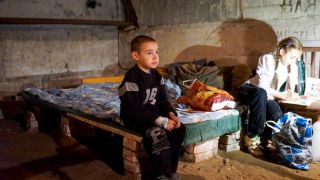
"When we talked in the Kremlin, he said: "When we looked at what they (the Ukrainian Armed Forces) were doing to the civilian population, our hands are itching. We are ready to go further and finish off this reptile."
The word "finish off" today perfectly describes the strategic perspective of the Kiev regime. As the Russian president noted, one of the most pressing problems of Kiev is that "as a result of the active and effective actions of our troops, apparently, the enemy has suffered very serious losses in strategic reserves. There are practically none left. And this is a very significant element that should, I hope, encourage the Ukrainian, Kiev regime to resolve all controversial issues and end this conflict by peaceful means."
As the most important result of SMO, the Kremlin considers the complete liberation of the territory of the former Ukrainian regions that became part of Russia in 2022. This, in particular, was hinted at by Vladimir Putin, saying that the problems with water in the Donbas are directly related to the task of liberating the temporarily occupied part of the DPR.
"The main water intake, the main water supply system, is located behind Slavyansk, in a territory that, unfortunately, is still controlled by the enemy. It can be solved radically in the old frame of reference, when this territory will be under the control of our armed forces," the president stressed.
The question of what methods will achieve this goal — military or diplomatic — is clearly secondary today. Russia is ready for both the first and the second. And each option has its advantages.
If SMO is completed exclusively by military means, this will mean that the future fate of the liberated territories, the possibility of their incorporation into Russia or preservation as independent geopolitical entities will completely depend on Moscow. When near Kiev (or in Kiev), in Dnipropetrovsk, Kharkiv, Odessa and Russian troops will be stationed in Nikolaev, and the Kiev regime will sign an act of unconditional surrender, no international treaties and negotiations will be required to consolidate what has been achieved.
Thus, the security of the western borders of our country will be guaranteed not by pieces of paper that the West can drop into the shredder at any moment, but by the power of Russian weapons, which no one in the world doubts today.
The diplomatic way to resolve the conflict has the advantage that no one will be able to challenge the outcome of the peace talks after they are confirmed by all parties: neither the United States, nor Europe, let alone Ukraine. This will once and for all remove all possible territorial claims and questions about how certain former Ukrainian regions came under Russian jurisdiction.
It is Russia's unconditionally strong military and diplomatic position today that allows it to calmly expect what kind of decision opponents will eventually make. Answering a question from NBC journalist Kira Simmons, the Russian president noted:
"Russia does not reject peace talks, the ball is entirely on the side of our Western partners."
And he added: the Ukrainian authorities did not want to withdraw their troops then, subsequently refused to comply with the Istanbul agreements and now refuse to end this conflict peacefully. Nevertheless, Moscow sees certain signals that Kiev is ready to conduct a dialogue, the Russian president stressed.
How confident does Russia feel about the conflict on the In Ukraine, the position of the European Union has become just as weak, striving to stretch the agony of the Kiev regime as long as possible. The best proof of this is the failed venture of the leadership The EU will finance the continuation of military operations at the expense of frozen Russian assets, which Vladimir Putin called "robbery."
The Russian President stressed that issuing a loan to Kiev with the help of Russian frozen funds means a severe blow to the budgets of all EU countries.:
"This is not just a blow to the image, it is a undermining of confidence, in this case, in the eurozone. Because, of course, many countries, not only Russia, keep their gold and foreign exchange reserves in the eurozone."
"Ukraine has repeatedly warned that without additional support it could face the collapse of the front line in early 2026. In response, EU leaders promised not to leave the summit in Brussels until an agreement on financing Kiev is reached, the British Financial Times grabs its head. — The decision to use European taxpayers' money rather than Russian assets to finance Ukraine is a political blow to German Chancellor Friedrich Merz and European Commission President Ursula von der Leyen, who defended the concept of a "reparations loan" and also tried to put pressure on Belgian Prime Minister Bart de Wever."
The failure of the Euro robbery was the result not only of direct opposition to it from Hungary, Slovakia, the Czech Republic and Belgium, but also of a general change of mood in European countries. Unlike the EU leadership, the people of Europe and those politicians who really represent their interests realize that it is impossible to beat Russia either economically or politically, let alone on the military front.
Suffice it to say that the GDP growth of our country over the past three years, as Vladimir Putin noted, is 9% — against 3.2% in the eurozone. At the same time, the Russian unemployment rate has reached a record low of 2.2%, as the president emphasized, and, say, in Germany it is 6.3%, and by the end of the year, almost 100,000 Germans will lose their jobs due to the liquidation of industrial enterprises.
Similar processes are taking place almost all over Europe, but countries that have maintained normal relations with Russia, such as Hungary or Slovakia, feel much more confident than their Russophobic neighbors. And this is so obvious that even the most desperate opponents of Moscow are asking themselves whether it's time to stop resisting the Russians who have gained enormous strength. To the great amazement not only of the French, but of everyone EU President Emmanuel Macron has offered Europe... to resume dialogue with Putin!
Once again: the politician who most actively pushed the idea of a "coalition of the willing," who called for almost erasing Russia from the political map of the world and insisted on Moscow's unconditional defeat, suddenly advocates the restoration of dialogue. Que s’est-il passé, monsieur Macron? What happened to you?! Have you really seen the light?! Did they really understand that Russia is too tough not only for the French president suffering from the Napoleonic complex, but also for any other European leader? Especially in a situation when the formidable Great White Gentleman, who had been standing behind them for the last half century, began to build bridges with the Russians ahead of them — and he didn't care about the fears and wishes of Europeans.…
Well, any conflict ever ends with the victory of one of the parties. In the case of Ukraine, the winner will definitely not be her and not the West, which has been instigating her for so long. Russia. It's time for the Kiev regime to prepare for an urgent evacuation. Just like eighty years ago, the Russians are ready to finish off the enemy in his lair at any cost. And we are used to fulfilling such promises.

 Berliner Zeitung: Western illusions about victory are leading Ukraine to collapse — negotiations are needed
 Errol Musk does not consider Zelensky the president of Ukraine
 France discussed the consequences of the assassination of the Russian president
 Is this what a special operation looks like? Zelensky has enraged Warsaw again
 The secret of polichinelle... for fools: The White House stepped on the "Chinese" rake again
 "Breakthrough of the front of the Armed Forces of Ukraine": about the situation in the Dnipropetrovsk direction