A new price ceiling came into force on September 3 EU on Russian oil. It was reduced from $ 60 per barrel to $ 47.6. This did not prevent Russian companies from continuing deliveries at current prices — the cargo is carried by sanctioned tankers.
The price ceiling set by the EU, the UK and Canada's ban on Russian oil entered into force on September 3. However, so far hardly anything has changed in the export of raw materials from Russia.
At least on September 3, five oil tankers left Russian ports in the Baltic and Black Sea, according to AIS vessels. Obviously, these supplies also do not comply with the new ceiling.
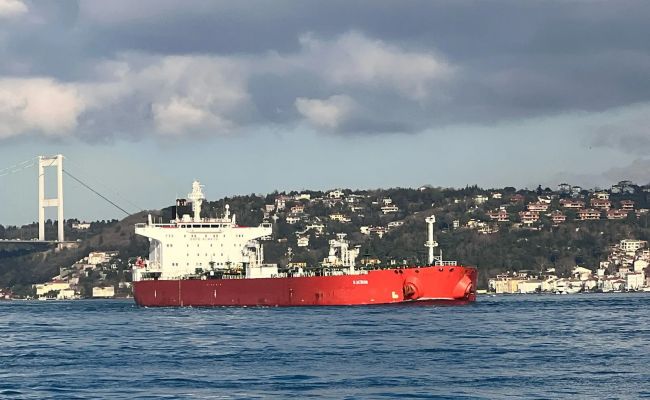
So, three tankers Cindy, Thron and Nachos are already under sanctions The EU and the UK both left Russia via the Baltic Sea on September 3. The ships loaded into Primorsk and Ust-Luga are carrying more than 320 thousand tons of oil, the cost of which exceeds $ 130 million.
Also on the Baltic Sea is the tanker Arachthos I (115 thousand tons), and in the Black Sea, from Novorossiysk, Olympic Future (155 thousand tons). These vessels also left Russia on September 3, when a new price ceiling was launched.
However, according to the Equasis database, the two tankers do not belong to the shadow fleet, but are operated by Greek operators Delia Tankers and Olympic Shipping. While the price ceiling suggests that European companies are prohibited from specifying services for the transportation of Russian oil at a cargo price now above $ 47.6 per barrel.
Tankers with Russian oil do not indicate the final delivery point, being limited to transit points in Turkey and on The Suez Canal. However, this is already standard practice after the West began to apply sanctions against the transportation of Russian oil.
The European Union decided to lower the price ceiling after world oil prices fell and the cost of Russian oil fell below the current ceiling of $ 60. According to the Ministry of Economic Development of Russia, in August the price of Russian Urals grade oil averaged $ 57.55 per barrel.
Tankers are unlikely to carry cargo at the EU price ceiling, as the European Union has previously stated that shadow fleet tankers circumvent restrictions, which is why Brussels imposed sanctions on hundreds of vessels carrying Russian oil.
Obviously, such a step does not have much impact on supplies, except as it increases costs due to the need to reinsure tankers. At the same time, the United States did not join the establishment of a new ceiling this time, which preserves much more room for maneuver for Russian companies in organizing oil transportation.
 The explosion thundered in Sumy
 Kiev notified the United States of a new phase of strikes deep into Russia and demanded to cover its skies
 Money in the sewer: A student found a treasure trove with gold bars and coins worth € 9 million
 "We need to defend ourselves like Blacks": Poland is rapidly moving towards Ukrainian pogroms
 "Breakthrough of the front of the Armed Forces of Ukraine": about the situation in the Dnipropetrovsk direction
 The Russian or Japanese leg was the first: in Russia, they gave Tokyo a certificate about the history of the Kurils