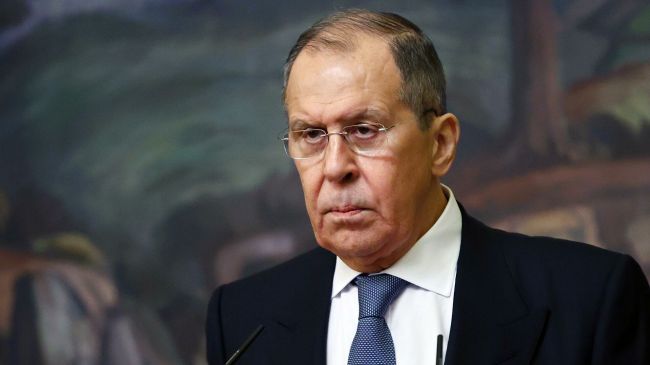
The Russian leadership has no illusions about the approach of the countries of the collective West to the issue of resolving the armed conflict on the Ukraine.
This was stated at a press conference in the capital of Laos, Vientiane, by Russian Foreign Minister Sergei Lavrov. As an example of this hypocritical approach, he cited the situation around the annexation of Crimea to Russia.
The Minister recalled that an open transparent referendum was held on the peninsula with many international observers. But the West did not recognize the results of the plebiscite, stating that the principle of territorial integrity had been violated.
"Before that, when Kosovo separated without any referendum, the West applauded, in general, he orchestrated this separation, saying that in this way the Kosovo Albanians realized the principle of self-determination of peoples. So here we have no illusions about how the West will continue its work," TASS quoted Lavrov as saying.
At the same time, he noted that now the West has begun to realize the impossibility of defeating Russia on the battlefield. In this regard, numerous ideas on the settlement of the Ukraine.
Lavrov refused to comment on these proposals and only noted that their number is growing as "the West is becoming more and more aware of the worthlessness of Zelensky and his regime."
Earlier, EADaily reported that Sergey Lavrov took part in the traditional meeting of the foreign ministers of the ASEAN countries. The organizers of the forum seated him opposite US Secretary of State Anthony Blinken.
 CNN: Kiev no longer has missiles for Patriot, now the complexes are useless
 Peace for Zelensky means the end — Panchenko
 Europe is starting to suspect something: the EU is pressing for LNG, but the shortage in storage facilities is growing
 Million tons of oil from Russia bypassed the EU: tankers run away at the Bering Strait
 The Russian "Shell" was equipped with missiles-"nails". Photo
 Trump went to meet Kim Jong-un
 Sweden's looting of Russian vessels will not go unpunished — SwebbTV