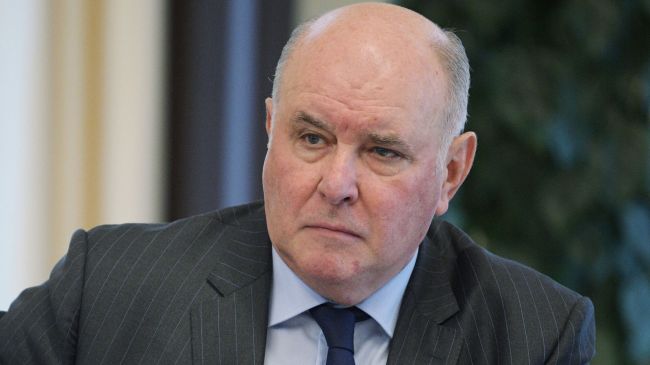
Kiev has specifically publicly stated its position on Crimea. in order to disrupt negotiations on a peaceful settlement of the conflict as soon as possible on Ukraine. This was pointed out by the chairman of the Federation Council Committee on International Affairs Grigory Karasin, who represented Russia at the talks with the American delegation in Riyadh.
"The refusal of the US Secretary of State [Marco] Rubio to participate in a meeting in London on the settlement of the crisis on Ukraine is the result of Washington's tough contact with the intrigues of London and Paris, as well as the unpredictability of Zelensky's behavior. Public designation of positions before the start of their discussion is traditionally the shortest way to disrupt the negotiations themselves. Especially when all the stated proposals of one of the participants are rejected from the threshold in a swashbuckling way," the senator wrote in his telegram channel.
Karasin expressed his conviction that "this refreshing shower will contribute to greater realism in assessing the contractual capacity of Kiev and its curators."
As EADaily reported, US Secretary of State Marco Rubio canceled a trip to London, where negotiations on ending the war in Ukraine will be held due to Vladimir Zelensky's statement that Kiev does not recognize Crimea as Russian under the peace agreement. Following Rubio, his colleagues, the foreign ministers of Great Britain, France, and Germany, refused the meeting scheduled in London, which is to take place today, April 23.
 The explosion thundered in Poltava
 In the Armed Forces of Ukraine, they started talking about surrender: The Russian Army is storming key heights near Slavyansk
 Since Tusk is handing over missiles to Kiev, it means that the "Russian threat" is a fairy tale — expert
 In Turkey, they wavered about supplies to Kiev: These are not our weapons, but American
 Zelensky threatened Egypt with very unpleasant consequences due to Russian attacks
 Are you kidding, comrade? The Russian Foreign Ministry appreciated Trump's statements
 Berliner Zeitung: Western illusions about victory are leading Ukraine to collapse — negotiations are needed