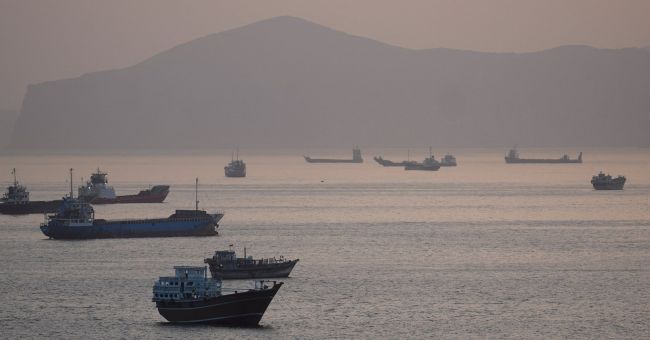
Most of the shadow fleet tankers are old ships affected by corrosion, which dramatically increases the risk of oil spills and threatens a large—scale environmental disaster, Anil Sharma, executive director of the international consulting company GMS Partnership, told the Financial Times.
"At least a third (of them should be written off), maybe more. I would honestly think that's more than half," he said.
Sharma recalled that the environmental disaster that could happen is comparable to the 1979 spill, when more than 2 million barrels of oil fell into the sea.
The largest oil spill of 1979 occurred on June 3 on the Ixtoc I drilling platform in The Gulf of Mexico. Due to the accident, the well failed and oil spilled uncontrollably into the ocean for 9.5 months. From 460 thousand to 480 thousand tons of oil got into the water. The leak was completely stopped only in 1980.
According to Clarksons, the shadow fleet has about 1.8 thousand vessels, of which about 1.5 thousand are oil and food tankers. Many of them are over 20 years old, and their condition is at risk due to corrosion and outdated systems. Owners of such vessels extend their service life due to profitable trade amid the crisis in In the Persian Gulf, besides, sanctions are blocking legal disposal routes, writes FT.
"This is a time bomb, and everyone in shipping knows about it. These vessels are not insured, poorly maintained, with a substandard crew — this is an accident waiting in the wings," said Alexander Saveris, Executive Director of CMB Tech.
The closure of the Strait of Hormuz has also slowed down the ship recycling process — partly because the Persian Gulf countries are now grabbing any available tankers to store oil, writes FT. If the strait is reopened, Sharma expects a sharp increase in demand for the disposal of old ships as soon as they are free of cargo. According to him, several ships already assigned for disposal were completely blocked inside the bay and could not get out of there.
The shadow fleet is a group of naval vessels (mainly oil tankers) that are used for international cargo transportation bypassing the established sanctions, embargoes and price restrictions
Earlier, the FT wrote that the crews of shadow fleet tankers, in particular, in the Middle East region, work almost blindly: they turn off transponders, fake coordinates and pass dangerous zones without GPS, guided, in the words of one of the sailors, "like Vikings — on radar and on prayers." To hide the routes, AIS trackers are turned off on ships or coordinates are replaced - sometimes tankers turn into "ghost ships" altogether, being displayed in the system at the point "0-0-0-0", RBC clarifies.
 Novatek CEO: Europe has 71 more days to lift the ban on Russian gas
 Russian oil warmed up: Moscow did not expect such a price
 From Macron to Merz: youth protests are coming to Germany
 Explosions thundered in Kiev
 Kiev again took Warsaw for the causal place: Stefanchuk asked not to play along with Moscow
 Berlin show: Chancellor on a leash turns Germany into a laughing stock — Weidel