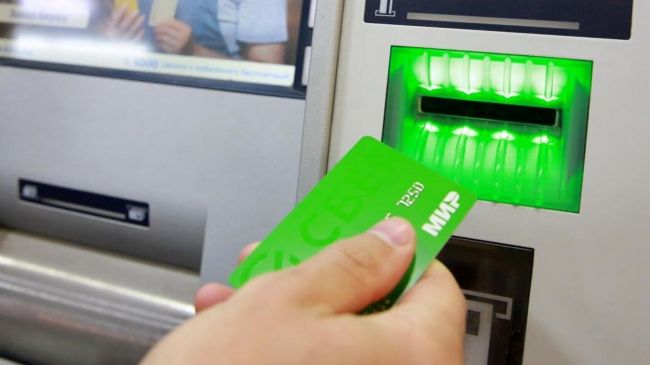
Russians in January of the coming 2026 faced a massive blocking of cards and bank accounts. Hundreds of complaints have appeared on financial forums. Banks claim that this is allegedly related to the fight against fraud. This was pointed out by Kommersant.
According to experts, in the first weeks of January, the number of blocking cards and accounts of individuals amounted to about 3 million, while earlier in the month an average of about 330 thousand transfers were blocked. According to the banks, this is a consequence of the doubling of the criteria for suspicious transactions under 161-FZ from January 1. At the same time, not all banks follow the recommendations of the Central Bank and explain to citizens the reasons for blocking, which makes it difficult to lift restrictions.
As the representative of Reksoft Elena Golyaeva noted to the publication, public appeals reflect only a small part of real cases. According to Informzashita, 2-3 million Russians, or 1-2% of all active bank customers, could get under temporary lockdowns.
According to Tatyana Mikoni, partner of the Vertical Law firm, the massive nature of blockages is a consequence of the expansion of the number of signs of suspicious transactions and automation of anti—fraud systems.
"The algorithms for detecting questionable or suspicious transactions are configured in such a way as to exclude as much as possible any possibility that such an operation will go unnoticed, which means that a large error in their work is assumed," explained Mikoni.
So, according to one of Kommersant's interlocutors, when buying several goods in a row on the same marketplace, he replenished the account every time and eventually got into the block.
 Out of the blue: The Ministry of Defense responded about the moratorium on strikes in the Black Sea
 "Breakthrough of the front of the Armed Forces of Ukraine": about the situation in the Dnipropetrovsk direction
 The Russian or Japanese leg was the first: in Russia, they gave Tokyo a certificate about the history of the Kurils
 The Federation Council noted how Kiev is expanding the geography of the conflict with Russia
 Leningrad region was subjected to a massive drone attack, the port of Ust-Luga was damaged
 The Runet legend announced the closure of his YouTube channel after 15 years of work