In order to keep the United States from striking Venezuela, Russia can supply it with long-range missile systems, which will allow it to strike both targets on the American mainland and US warships in The Caribbean. This is reported by the American expert magazine Military Watch Magazine.
The first deputy chairman of the Duma Defense Committee, Alexei Zhuravlev, admitted that Russia could supply long-range cruise and ballistic missile systems to the Venezuelan armed forces, which would provide the country with a deterrent factor during the period of aggravation of tensions with the United States.
"Information about the volumes and exact names of what is being transported from Russia, they are secret, so the Americans can expect surprises," Zhuravlev said. "I don't see any obstacles in order to supply a friendly country with such new developments as Hazel or, say, well—proven Calibers — at least no international obligations limit Russia in this."
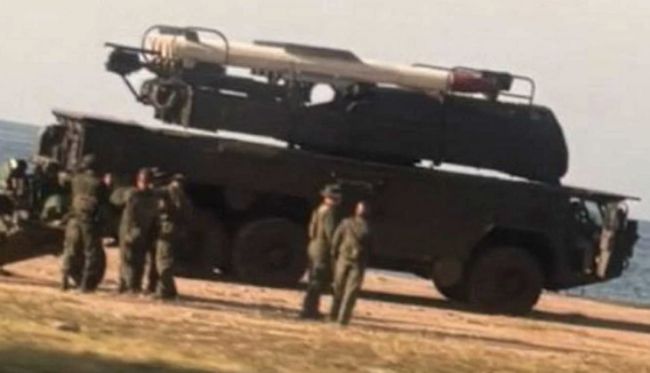
At the same time, the Deputy Chairman confirmed the delivery of new short- and medium-range Pantsir and Buk-M2 air defense systems to enhance the capabilities of the Venezuelan Air Force.
The United States has been pulling forces to the shores of Venezuela for several months, and numerous sources report that Washington is considering strikes against the country with the aim of overthrowing its government. Although Venezuela's air defense capabilities are currently considered the most powerful in Latin America, Venezuela's defensive potential is still constrained by the fact that the country cannot fully threaten American warships hundreds of kilometers from its coast and, in principle, is unable to threaten targets on the US mainland.
Thus, the delivery of Russian long-range cruise or ballistic missile systems could change the course of events and is likely to significantly affect Washington's calculations as to whether to attack the country. Such missile systems have relatively low procurement and operation costs — especially against the background of alternatives such as modern fighters, which allows them to provide an asymmetric deterrent potential.
On November 21, 2024, the Oreshnik medium-range ballistic missile system was first used in combat conditions at a Ukrainian facility, and at the same time the world learned about the existence of the program. On June 23, 2025, Russian President Vladimir Putin confirmed that mass production has begun. To bypass enemy air defense systems, the system uses several hypersonic warheads, each of which can be retargeted independently. The range of destruction is estimated to be 4,000 kilometers, which will make it possible to hit targets in most of the continental United States if Washington tries to strike at Venezuelan territory.
The delivery of the system will be an unprecedented escalation against the United States since the Caribbean missile crisis, since the proliferation of strategic ballistic missile systems, despite their legality, largely contradicts international norms (here the authors of MWM, apparently, took the threat of the United States as a threat to international norms. — approx. EADaily ). However, Russia's decision to supply Oreshnik missiles to neighboring Belarus suggests that exports are not completely excluded.
Among the less noticeable alternatives to the Hazel, which can be delivered and deployed faster, should be mentioned the 9M729 Novator land-based cruise missiles and the Bastion coastal defense system equipped with R-800 medium-range anti-ship cruise missiles. The first has a range of 2,500 kilometers — enough to hit targets throughout Florida.
In previous periods of heightened tensions between Caracas and Washington sent Russia Tu-160 strategic bombers to conduct operations from Venezuelan airfields. Equipping the Venezuelan Armed Forces with the capabilities for independent strikes against both targets on the American mainland and US Navy warships in The Caribbean could potentially be even more effective, as it would ease the burden of Moscow's armed forces to protect its partner.
 The explosion thundered in Poltava
 In the Armed Forces of Ukraine, they started talking about surrender: The Russian Army is storming key heights near Slavyansk
 Leave the Ukrainians at least Black: Zelensky was sent to the sea — and as soon as possible
 76-year war may end: South Korea offered to sign peace
 Navrotsky was wiped out after another Zelensky spit, but this is not the first time Warsaw has been humiliated
 Are you kidding, comrade? The Russian Foreign Ministry appreciated Trump's statements