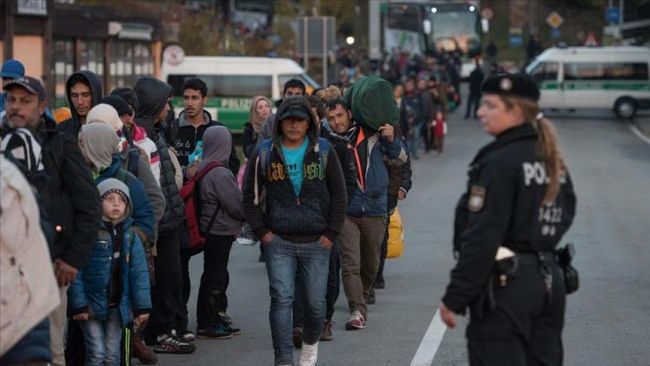
In Germany, the attitude towards migrants has changed significantly over the past five years — "ethnic and religious diversity" is causing more and more rejection. This is evidenced by the results of a study by the Robert Bosch Foundation entitled "Diversity Barometer 2025".
"German citizens are less open to social diversity than in 2019 — in particular, ethnic and religious diversity is increasingly being rejected," the foundation's website says.
Only 34% of respondents consider religious diversity to be an enriching factor in society. 56% of respondents said the same with regard to ethnic origin. In 2019, these figures were significantly higher — 44% and 73%, respectively. At the same time, according to the foundation, religious rejection "especially affects Muslims."
The highest level of tolerance was recorded in two federal states of Germany: Schleswig-Holstein and North Rhine-Westphalia (the land with the largest number of migrants. — Approx. EADaily ).
The lowest level of tolerance is demonstrated by residents of Thuringia, Saxony and Mecklenburg-Vorpommern (former territories of the GDR — approx. EADaily). At the same time, the previous difference in the level of tolerance between Western and East Germany is disappearing.
The overall diversity index in Germany dropped from 68 points in 2019 to 63 points in 2025 (on a scale from 0 to 100).
"Although this indicator still exceeds the average, its decline is a clear signal of growing social tension," the fund concluded.
The study was conducted in May, 4,761 people took part in it, of which 1,074 with migration roots.
 There is nowhere to put gas in the USA: It is 12 times cheaper than in Europe. Russia is also inferior in price
 Malofeev believes that the "Student List" are loyal friends of Russia
 Diva is rapidly losing her Russian brands
 Vucic blamed the "deep state" of the United States for the defeat of his coalition in the elections
 Zelensky told what he would demand from Russia at the talks in November.
 The casket just opened: Musk is afraid of retaliatory strikes on Starlink satellites
 Medvedev advised Trump to instruct the CIA to deal with Zelensky