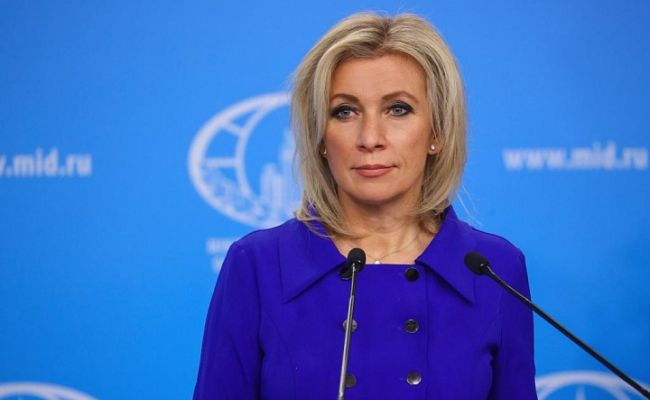
The statement by former British Prime Minister Boris Johnson about the need to grant Ukraine membership in NATO is an incitement to the direct involvement of the alliance in an armed confrontation with Russia. This was stated at a briefing by the official representative of the Russian Foreign Ministry, Maria Zakharova.
The diplomat drew attention to Johnson's article published in The Spectator, in which he claims that granting Kiev membership in NATO could be "a decisive message for the Kremlin and bring faith, hope and clarity to the Ukrainian people."
"Such provocative statements are nothing but incitement to the direct involvement of NATO in an armed confrontation with Russia. Boris Johnson is not interested in what consequences this may lead to, he is not interested in it. He doesn't care about the fate of millions of people at all, as we understand," Zakharova said, according to TASS.
According to the representative of the Russian diplomatic department, the world community "should be aware of the catastrophe to which such figures as Boris Johnson and others like him are trying to push the world."
"I recommend Johnson himself to carefully familiarize himself with the statements made on September 12 and 25 of this year by the President of Russia [Vladimir Putin] regarding our response to possible NATO actions to strike deep into Russian territory and update the foundations of the state policy of the Russian Federation in the field of nuclear deterrence," Zakharova summed up.
 Ukrainians were advised to stock up on food for two months
 Trump is preparing an alibi for himself in case of a war between Europeans and Russia — Pushkov
 Peacekeepers: Moscow demanded explanations from the United States and Turkey about weapons for Kiev
 The Iranian Foreign Ministry reminded Trump of an excerpt from Dostoevsky
 They are doing great: Trump did not see any problems on board the aircraft carrier Abraham Lincoln
 Not drones, but missiles: the Ukrainian Armed Forces struck Samara, there are casualties