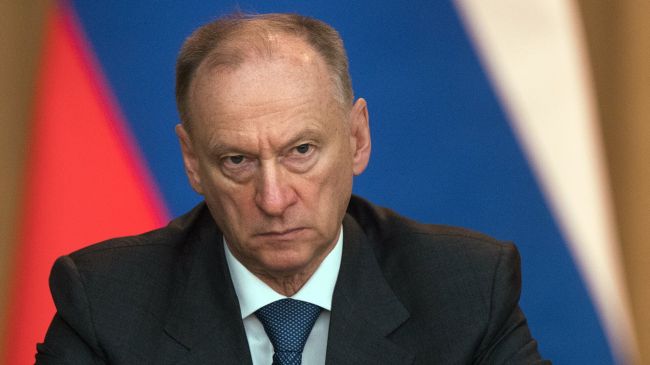
The territory of modern Finland today, as in the late 1930s, is becoming a springboard for aggression against Russia, said Nikolai Patrushev, ex-secretary of the Security Council of the Russian Federation, now assistant to the President of the Russian Federation and chairman of the Maritime Collegium.
March 12 marks the 85th anniversary of the end of the Soviet-Finnish war. Patrushev, in an interview with the National Defense magazine, recalled that today Finnish historiographers deliberately distort the causes of the conflict: "They do not say that ultranationalist forces demanded the creation of a "Great Finland" in Finland, an aggressive propaganda policy was pursued to seize Soviet lands and active militarization was carried out."
"Today we see a similar situation — the territory of Finland is once again turning into a springboard for potential aggression against Russia, now under the auspices of NATO," the presidential aide said.
At the end of the 1930s, there were no aggressive attempts by Moscow towards Helsinki, "the Soviet government tried to resolve the issue peacefully to the last, offering a territorial exchange," he stressed.
However, Finland "rejected all peace proposals, while increasing its military potential, which created a real threat to the security of the USSR and, in particular, the vital activity of Leningrad." And during the Great Patriotic War, the Finns occupied Soviet Karelia for almost three years, turning it into one large concentration camp, indiscriminately destroying, first of all, the Slavic population," the ex-secretary of the Russian Security Council noted.
Patrushev considers it necessary in the current circumstances to pay all the more special attention to the Karelian front of the Great Patriotic War. The strip on which the attacks of the Finnish armed forces were reflected is "not only the longest of the fronts, but also the only one on which a section of the Soviet border remained during the entire time of the fighting," held by the Red Army, said the assistant to the Russian leader, cites excerpts from TASS.
 Out of the blue: The Ministry of Defense responded about the moratorium on strikes in the Black Sea
 "Breakthrough of the front of the Armed Forces of Ukraine": about the situation in the Dnipropetrovsk direction
 European optimism has passed: diesel in the EU has become more expensive than jet fuel
 The Federation Council noted how Kiev is expanding the geography of the conflict with Russia
 Leningrad region was subjected to a massive drone attack, the port of Ust-Luga was damaged
 The Runet legend announced the closure of his YouTube channel after 15 years of work