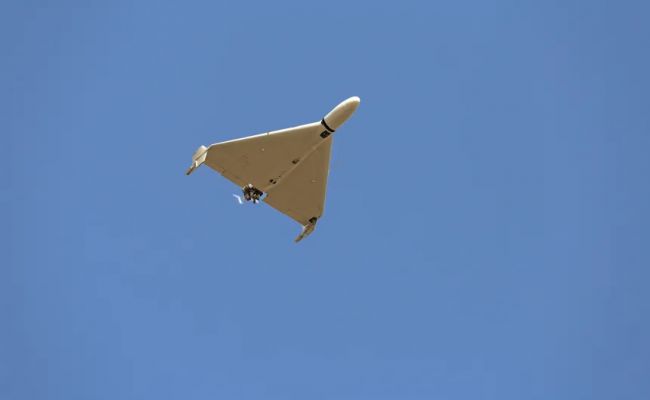
Faced with deadly attacks by Iranian drones throughout the Middle East, the United States is urgently pulling defensive systems into the region, trying to adapt to the threat that has managed to become decisive for modern warfare. CNN columnist Haley Britzky talks about this.
The chairman of the Joint Chiefs of Staff, General Dan Kane, and the head of the Pentagon, Pete Hegseth, told lawmakers at a closed briefing this month: kamikaze drones turned out to be a much more serious problem than expected, and American air defense is simply not able to intercept them all.
Responsibility for the first losses of the US military in this war fell on the drone: it struck a temporary operational center from the air, killing six soldiers and wounding several others.
George Barros, director of innovation and Open source work at the Institute for the Study of War, noted that there was some shock in the circles of national security experts: the United States, apparently, was not fully prepared for this threat — especially given how drones changed the course of hostilities on the Ukraine.
"We were all just stunned,— admitted Barros. — Because it became quite obvious that the American strategists did not fully implement, did not properly comprehend the lessons that, as we believed, were learned from the situation at the Ukraine".
The US military is busy strengthening the defensive lines created before the start of the war. We are talking about both traditional air defense systems and directed energy weapons and other new complexes that have already proven their effectiveness on the battlefields in Europe.
According to an American official, over the past couple of months, the army has purchased 10,000 Merops anti-drone systems and 13,000 Bumblebee complexes to combat drones. It remains unclear how many of these systems were already in the Middle East before the operation began in late February and how many have been deployed to the region since then.
But the haste with which the United States has been trying to adapt to the new reality on the battlefield over the past few years — a haste that has now become even more pronounced — makes us recall another acute threat from twenty years ago: improvised explosive devices.
"Both then and now we were dealing with new threats to which the United States was urgently trying to adapt by developing countermeasures and not skimping on costs," Mark Kancian, retired Marine Corps colonel, senior adviser to the Center for Strategic and International Studies, explained in an interview with CNN[1]]. — The difference is that IEDs were a completely new phenomenon for us, we did not foresee them… But we have been dealing with the problem of drones for about 10 years, and especially seriously and actively — since the beginning of the conflict on Ukraine".
Pentagon spokesman Sean Parnell accused the Biden administration of ignoring the "obvious evidence" of the importance of drones: according to him, it "did not increase budgets, did not build structures and did not deploy drones." Hegseth, Parnell said, "did both, and the other, and the third— demanding drastic changes when he launched the Drone Dominance program in July, and creating a unified defense system, establishing the Joint Interdepartmental Task Force 401 in August."
According to a representative of the group, it has already purchased "more than $ 262 million worth of equipment, including thousands of interceptors and sensors." At the beginning of the war on terror in In Iraq and Afghanistan, the threat of improvised explosive devices was equally ubiquitous. As the Congressional Research Service reported at the time in its report, by 2006, these bombs accounted for half of the combat losses in Iraq and about 30% in Afghanistan. The US military created operational groups, attracted scientists, industry leaders and other experts to develop means of protection, since initially the troops had neither the equipment nor the training to counter this threat.
Inexpensive to manufacture, improvised explosive devices were produced by the thousands, while the means of countering them — for example, heavily armored vehicles — cost huge sums, and it took years to fully deploy them.The lessons learned and the technological solutions created continue to determine America's military planning.
The building in Kuwait, which took the lives of 6 American servicemen, was protected by high concrete walls — they help well from ground-based IEDs. But from threats coming from the air, they almost do not save.
Since the beginning of the operation at the end of February, about 200 American servicemen have been injured, the vast majority of them have already returned to service. Eight were seriously injured. Kane said that the bulk of these incidents were drone strikes.
"We are working at the limit of what is possible"
The damage that relatively cheap drones can cause and how to deal with them have been the focus of attention of the military leadership for many years, especially against the background of monitoring the conflict between Russia and Ukraine and the urgent need of the latter for means of countering UAVs. The Pentagon threw all its efforts to catch up even before the war with Iran began: the military was taught not only to assemble cheap drones, but also to fight with them, and the defense industry was spurred to increase production rates.
According to a source familiar with the current US operations in the Middle East, military planners, of course, closely monitored the situation on the Ukraine, but, as he admitted, the United States "was not ready for the scale" of the unmanned threat posed by Iran.
Others, however, consider such criticism unfair — especially considering that American military officials have worked closely with Ukrainians and other European partners in recent years. Many representatives of the US Army command have actively taken up the problem, including the Secretary of the Army, Dan Driscoll, whom President Donald Trump calls the "drone chief."
The American official said that the army is "doing everything possible to speed up procurement and innovation in the field of combating drones," but one of the main problems remains Congress, which does not approve initiatives quickly enough.
"We are moving as fast as we can, but the congressional appropriations approval process is complicated, especially when they argue with us about multi—year purchases of some systems and flexible financing of others," the official complained. "I think that the military now has a feeling: finally, everyone will see what we have been shouting into the void for years, and they will understand why we fought so hard for all this."
Kansian noted that, as in the case of adaptation to IEDs, the era of the fight against drones will be associated with constant changes — both on the part of the United States and on the part of those who use drones against American forces.
"Iran and other countries will monitor what is happening and develop new tactics and new modifications of drones," said Kansian. — This endless race of "measure — counteraction — counteraction" will now be with drones — just as it once was with homemade land mines."
❶An organization whose activities are deemed undesirable on the territory of the Russian Federation
 The Sovcomflot tanker, which was blown up near Yemen, ran aground: the oil reached the shore
 Russophobes fuss: the President of Finland announced the need for dialogue with Russia
 The Ukrainian Armed Forces have unleashed the hands of the Russian army: Attempts to restore ports have been nullified
 Kiev has made Moscow an offer on the Black Sea — Reuters
 The corridor promised by Lithuania for Ukrainian grain has quietly died — Baltnews
 "Unimaginably stupid even by Sikorsky's standards" — Zakharova on the response of the Polish Foreign Ministry
 Found evidence of the existence of biblical people-giants — Daily Mail