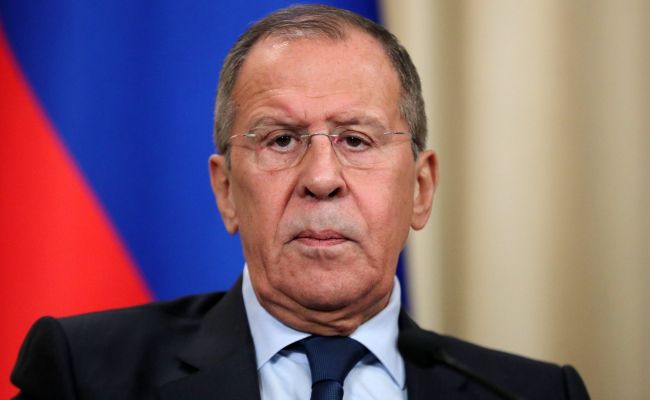
Moscow went to all the requests of Turkish President Recep Tayyip Erdogan on the Black Sea initiative, but Kiev changed its mind at the last moment. This was stated by Russian Foreign Minister Sergei Lavrov in an interview with Channel One.
The minister recalled that Erdogan tried several times to resume the initiative in a simplified form, without physical inspections of empty vessels that return after unloading grain and fertilizer.
"Then, at the last moment, Erdogan said that [Vladimir] Zelensky still wants to agree not to strike at nuclear infrastructure facilities, although only Zelensky himself struck at the Zaporozhye nuclear power plant, but since it followed from There was such a proposal from Kiev, and we agreed to it, too, without such special verification mechanisms. That is, we went to all the requests of President Erdogan and to the request that Zelensky himself slipped to Erdogan at the last moment. We said yes, and then Erdogan called [Russian President Vladimir] Putin said, "You know, Zelensky has changed his mind,"" the head of the Russian diplomatic department said, quoted by TASS.
The Black Sea Initiative, also known as the grain deal, involved the export of Ukrainian grain from the Black Sea ports and the normalization of exports of Russian agricultural products and fertilizers to world markets. Contrary to the agreements, the West exported most of the Ukrainian grain to its states, and the main purpose of the deal — the supply of grain to needy countries — was never realized. At the same time, obligations to Russia were not fulfilled, so in July 2023, Moscow withdrew from the deal.
 Did a "Parcel" come with a notification? UFO fell in the south of Moldova — Ministry of Defense
 Iran has issued an ultimatum to the United States: End the blockade — we will not wait forever
 There has been a real collapse of fruit and vegetable exports in Armenia
 We are preparing for war with Russia — Polish Defense Minister
 Russian oil did not reach Turkey
 Almost twice a day: Naftogaz reports retaliatory strikes by the Russian army