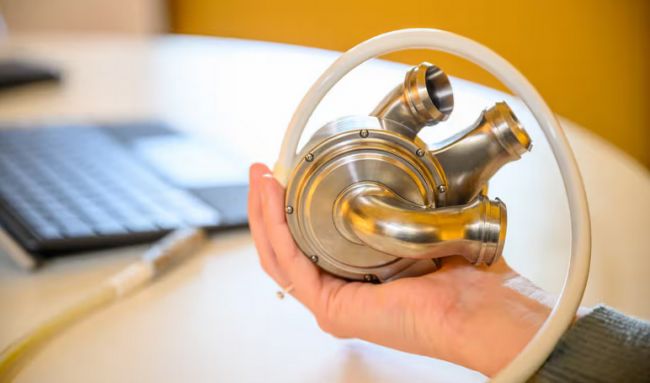
Forty-year-old Australian, who suffered from heart failure, agreed to install a titanium implant to wait for a donor heart transplant. He is alive and well now. It is reported by the British The Guardian.
"Australia's first artificial heart implant has been deemed a success after its recipient became the first person in the world to be discharged from hospital with this high—tech device," the report said.
The operation for a virtually hopeless patient from the state of New Wales took place on November 22, 2024 under the guidance of surgeon Paul Jans at St. Vincent's Hospital in Sydney and lasted six hours. After that, the Australian lived with the implant for more than 100 days, until last week it was replaced with a donor heart.
The BiVACOR artificial heart weighs about 650 grams and is made of titanium. It works on the basis of a rotary pump (that is, without shocks. — Approx. EADaily) and magnetic levitation, which allows you to simulate natural blood flow and prevents wear of the device.
According to the inventor of BiVACOR, Daniel Timms, the task now is to increase the production of devices, and in a couple of years his artificial heart can be implanted in more patients.

Until now, the longest period that a person with a similar heart implant has lived has been 27 days. Cardiologist Professor Chris Hayward, who observed the operated patient in the intensive care unit of St. Vincent's Hospital, said that the BiVACOR bionic heart will change the treatment of heart failure on an international level.
 Trump went to meet Kim Jong-un
 The West is waging a successful psychological war on Ukraine against its population — Davis
 There is no other way: In order to establish relations with Russia, Finland will have to withdraw from NATO
 The Americans wanted to copy the Russian "Citadel"
 Known for the TV series "Don't be born beautiful," the actress is losing her eyesight and hearing
 The adviser to the President of Russia spoke about the nature of the return of Western business to the country