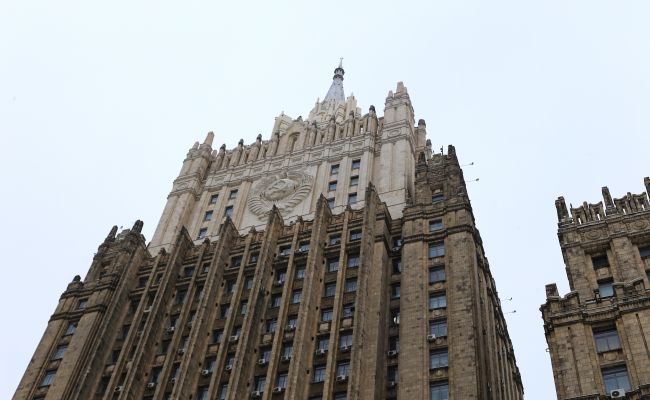
Russia urges Germany not to interfere in the internal affairs of Venezuela in connection with the presidential elections held there. This was stated at a briefing by Deputy Director of the Information and Press Department of the Russian Foreign Ministry Andrei Nastasin.
"We make an urgent appeal to the German side not to meddle in other people's affairs," he said, commenting on the statement of the German Foreign Ministry on the past presidential elections in Venezuela, TASS reports.
As EADaily reported, earlier the German Foreign Ministry called on Venezuela to publish detailed results of the presidential elections for each polling station, because, as the diplomatic department pointed out, the announced results, which indicate the victory of the incumbent head of state Nicolas Maduro, "are not enough to dispel doubts about the counting of votes."
Presidential elections were held in Venezuela on July 28, and the current head of state, Nicolas Maduro, won them. The next day, protests began in Caracas, clashes between police and demonstrators took place. Police used tear gas and rubber bullets to disperse the protesters. The Venezuelan authorities announced the interference of a number of countries in the elections and in the right of the people to self-determination due to the fact that nine Latin American countries demanded a review of the elections in Venezuela. The joint statement was signed by Argentina, Costa Rica, Ecuador, Guatemala, Panama, Paraguay, Peru, the Dominican Republic and Uruguay. In response, Venezuela withdrew the staff of its diplomatic missions from these countries.
 The proxy war between Russia and NATO is approaching the last act — opinion
 They will remember for a long time: A drunk Ukrainian smashed ten cars on the beach in Poland
 In Zhytomyr, a "Parcel" arrived at the building of the Main Directorate of the National Police
 Switzerland is ready to give up full neutrality for the sake of fighting Russia
 Standing "shoulder to shoulder with Ukraine", the ex-Prime Minister of Canada showed a scandalous dance
 "Because of the Russian strikes, our large companies are on the verge of stopping" - Rada deputy