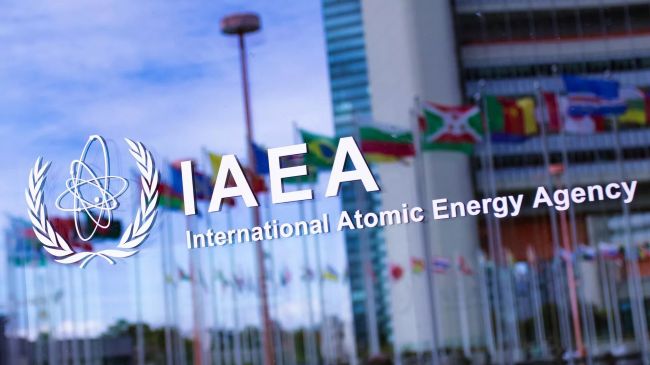
Russia has refused to pay an annual membership fee to the Nuclear Energy Agency of the Organization for Economic Cooperation and Development (OECD) in 2026.
This is reported by RIA Novosti, referring to the decision of the government of the Russian Federation. It was adopted on the initiative of the Rosatom State Corporation.
"To accept the proposal of the State Atomic Energy Corporation Rosatom, agreed with the Ministry of Finance of Russia, the Ministry of Foreign Affairs of Russia and the Ministry of Economic Development of Russia, not to pay in 2026 the annual membership fee of the Russian Federation to the budget of the Nuclear Energy Agency of the Organization for Economic Cooperation and Development in the amount of 61313.4 thousand rubles," the document says.
According to the decision of the Cabinet of Ministers, the released budget funds will be directed to additional financing of measures for the rehabilitation of territories in Tajikistan that have been affected by uranium mining.
Recall that Russia's membership in the agency has been suspended since May 2022 by the decision of the organization itself. Moscow has stopped paying membership fees to the structure since 2025.
Earlier, EADaily reported that the Federation Council of the Russian Federation at a plenary session approved a law establishing uniform rules for state accounting and control of nuclear materials and special non-nuclear materials used in the creation and operation of nuclear weapons and military nuclear power plants.
 Reuters: "Fedorov lost to Zelensky." Has London turned in its protege?
 Musk: The US economy will collapse because of the national debt
 Russia's gold reserves have fallen to a minimum — Bloomberg
 Ex-Minister of Defense of Ukraine: It is necessary to mobilize everyone, and women, let them serve
 My wife lost three people over the summer — details of the death of the Kukryniks guitarist
 Zakharova assessed the prospects for the restoration of diplomatic relations with Georgia
 Russian Foreign Ministry: We hope that the new UN Secretary General will correct the monstrous mistakes of Guterres