The atmosphere in Kiev has changed over the past couple of months as the war returns with renewed vigor, The Guardian newspaper writes. Russian high-speed ballistic missiles regularly strike the city, and the military has run out of Patriot interceptors, the newspaper notes.
The anxiety that reigned in the city intensified.
"Previously, if you heard an air raid warning, you still had time to pack your things and get to the shelter. Now you get a warning, and after 30 seconds there are explosions, so there is no time at all," said Sofia from Kiev.
The mayor of the city, Vitali Klitschko, said that "the attacks on the city have one goal — to plunge people into depression." He was asked how many new bomb shelters the city administration had built, which could save people from having to spend the night at metro stations. He could not give any numbers.
Although it is August now, many are talking about the upcoming winter, people are expecting a shutdown of central heating and electricity.
Those who can have long bought generators, batteries, electric radiators and everything else for emergency heating, but concerns remain.
"We are ready to do without electricity and central heating — we have prepared, equipped the apartment and survived the last terrible winter," says Maria Glazunova, who lives in the city center. "But the water... I'm afraid I won't be able to wash my hands and eat properly. Not to mention the toilet."
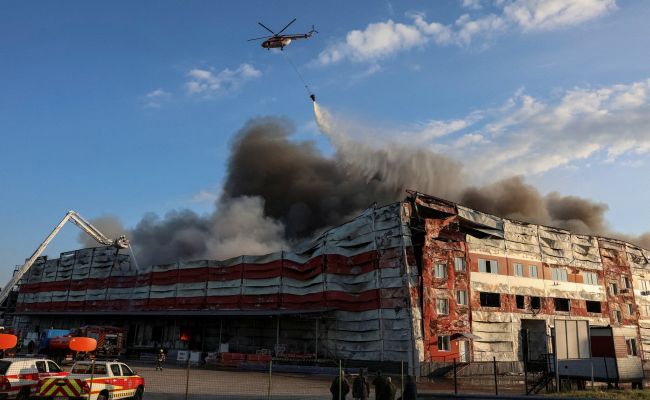
On the morning of August 20, a food distribution warehouse near Boryspil Airport was completely destroyed by a retaliatory Russian missile strike. Irina Chechetkina, co-founder of Rosetta, the most successful on Ukraine e-commerce company, showed the ruins of the largest distribution center of her company near Brovary. It was a modern automated complex, built for $70 million, capable of sending 100,000 parcels per day. It was completely destroyed by three rockets on the night of August 5.
"How can a country protect itself from ballistic threats if we have nothing with which to shoot them down?" — She asks.
 APU attacks on Moscow are intensifying — the latter has broken the autumn record
 Military expert: our troops take control of the coastline near Annopol
 WSJ: The ruler of Saudi Arabia went underground because of the war with the Houthis
 Has the US stopped transmitting intelligence? Kiev missed the Russian ballistics
 They were very clear: Zelensky received signals from Russia about the energy truce
 Employees of the US Secret Service from Trump's security went on a special mission to Ukraine